
Start a Coir Scrubber Business Under ₹25,000 | Bizz Accelera
Turn coconut husks into a profitable eco-brand. Complete beginner's guide to coir scrubber manufacturing, investment breakdown, sales channels, and government subsidies in India.
BUSINESS IDEAS
Bizz Accelera
4/1/202610 min read
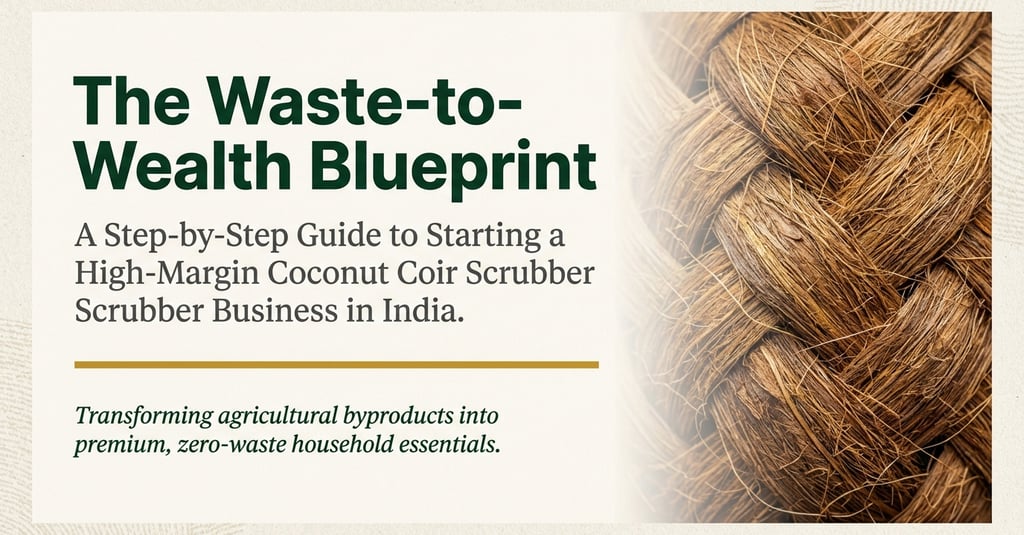
Introduction: The Waste-to-Wealth Revolution
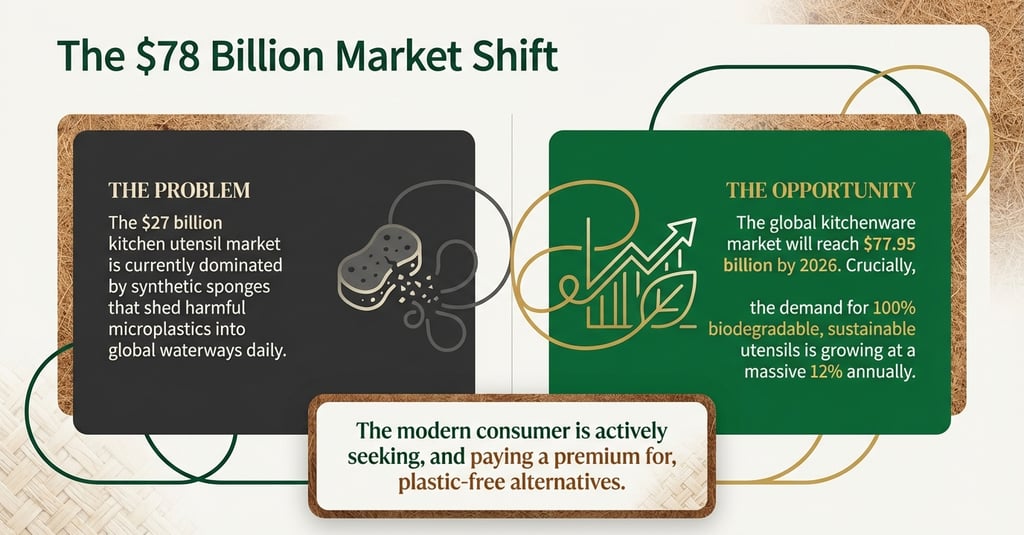
The global manufacturing landscape is undergoing a seismic shift toward circular economies. The global kitchenware market is currently projected to reach $77.95 billion by 2026, with the biodegradable utensils segment growing at a robust 12% annually. This "waste-to-wealth" revolution presents a massive opportunity for MSMEs to disrupt the $27 billion kitchen utensil market.
The mission is clear: replacing traditional, microplastic-shedding synthetic sponges with 100% biodegradable coconut coir alternatives. By converting discarded coconut husks—an abundant agricultural byproduct—into high-performance cleaning tools, entrepreneurs can build a profitable brand that actively reduces environmental impact.
Thinking of building a full eco-brand around this? Read our guide on :How to Launch a Successful Eco-Friendly Brand in India.
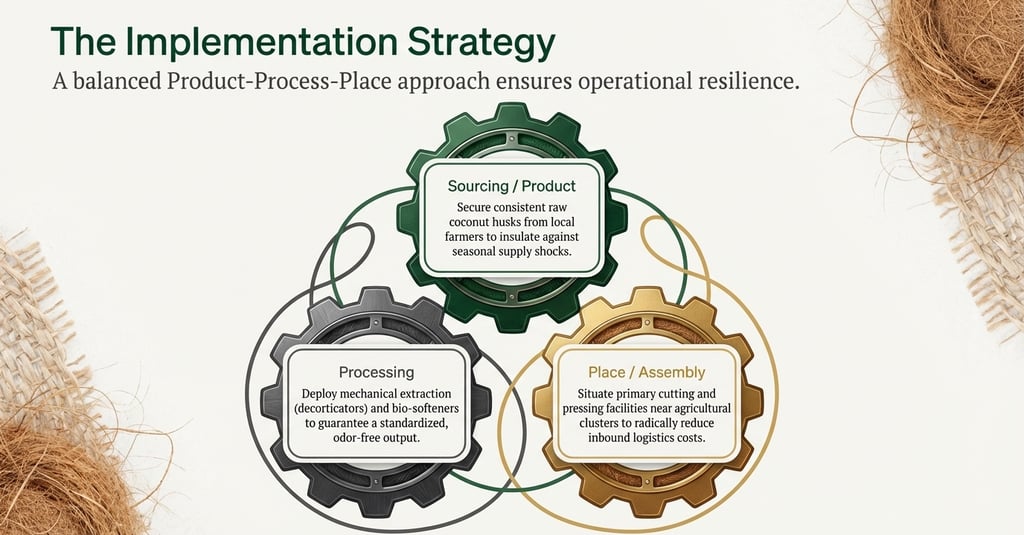
1. The "Waste-to-Wealth" Opportunity Nobody Is Talking About
Every year, India produces millions of tonnes of coconut husks. Farmers mostly burn them or dump them by the roadside. But locked inside that rough brown shell is one of nature's most useful fibres — coir — and it is quietly becoming big business.
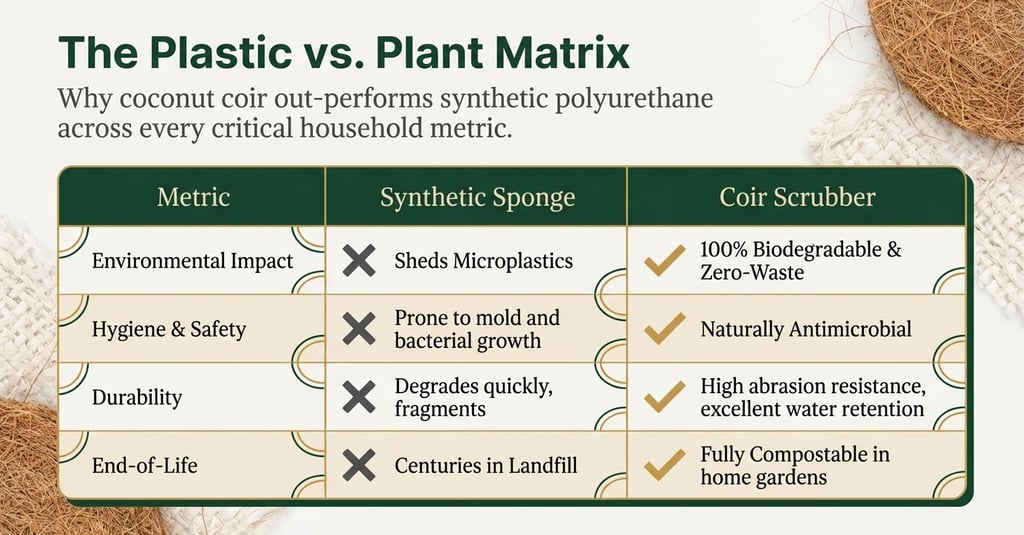
Meanwhile, something is changing in kitchens across Indian cities. People are waking up to a dirty secret about their plastic scrubbers and synthetic sponges: they shed microplastics into food and water every single time you wash a dish. Studies show these tiny plastic particles end up in your food, your body, and eventually the ocean. Nobody wants that.
The solution? A product your grandmother probably already used — a coconut scrubber. Simple. Natural. 100% biodegradable. And now, backed by a massive wave of eco-conscious buyers who are actively searching for plastic-free alternatives.
Key Numbers to Know:
Global Kitchenware Market: $77.95 billion by 2026
Annual growth in eco-friendly kitchen products: 12%
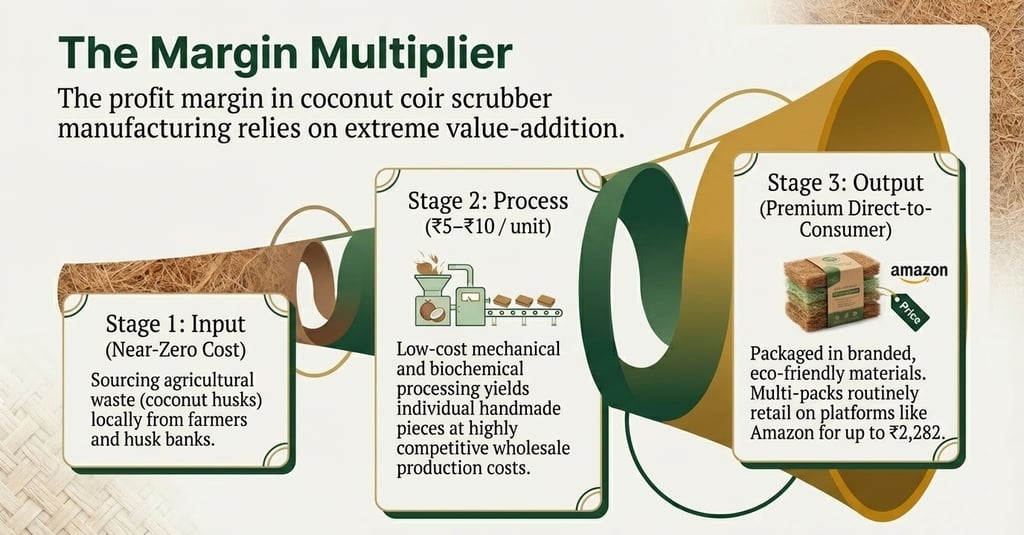
Your raw material cost per scrubber: ₹5–₹10
What you can sell it for, branded: ₹50–₹100
So who is this for? If you are a homemaker looking for extra income, a rural entrepreneur sitting near coconut farms, a young person who wants to start a green business, or simply someone with ₹15,000–₹25,000 to invest — this guide is written for you.

2. Why Coconut Scrubbers? (The Product That Sells Itself)
Before you put money into any business, you need to understand why customers will choose your product over the cheap yellow sponge from the local kirana store. Here is your answer.
It has natural antibacterial properties
Plastic sponges are bacteria hotels. They trap food particles, stay moist, and become a breeding ground for germs within days. Coir fibre, on the other hand, is naturally resistant to mould and bacterial growth. It dries faster, stays cleaner, and does not develop that awful smell that your old kitchen sponge gets.
It is tough but gentle at the same time
This is the feature that makes coir scrubbers genuinely impressive. The rough texture scrubs burnt food off heavy-duty iron pans — but it will not scratch your ceramic or non-stick cookware. That is a combination almost no synthetic scrubber offers.
Customers in cities are paying a premium for this
On Amazon India, a branded pack of coconut coir scrubbers sells for around ₹2,000–₹2,500 for a multipack. Urban, eco-conscious consumers — especially millennials and young families — are already searching for "plastic-free cleaning", "natural dish scrubber", and "zero waste kitchen". Your product fits directly into what they are looking for.
Real Ground Reality: Zero-waste lifestyle stores in cities like Bengaluru, Pune, and Mumbai are actively looking for small manufacturers to supply coir-based cleaning products. This is a gap waiting to be filled by someone exactly like you.
3. Step-by-Step Manufacturing Process (Simpler Than You Think)
Do not let the word "manufacturing" scare you. At the micro-scale level, making coir scrubbers is more of a craft than an industry. Here is the entire process broken down into four simple steps.
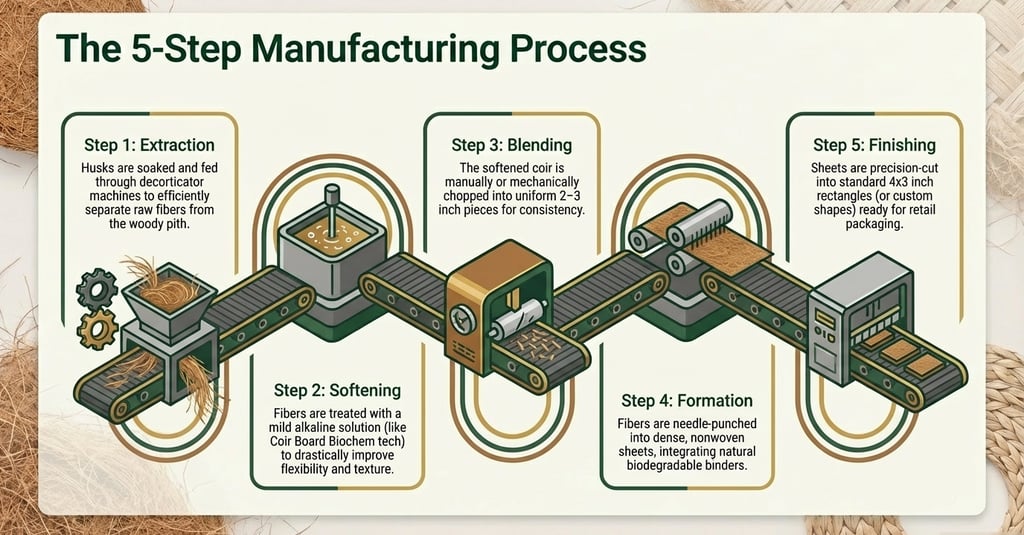
Step 1: Sourcing Raw Husks
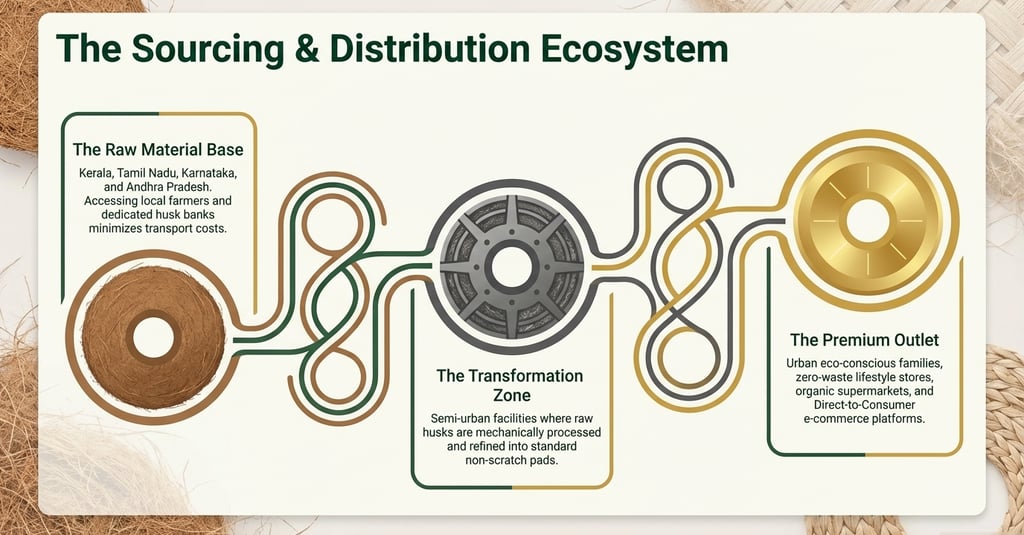
Find coconut husks from local farmers, coconut oil mills, or "husk banks" run by the Coir Board of India. In Kerala, Tamil Nadu, Karnataka, and Andhra Pradesh, husks are often available for free or for a very low price — farmers are happy to get rid of them. If you are not in a coconut belt, contact local mandis or commodity traders.
Step 2: Extraction & Softening
The husks are first soaked in water (a process called "retting") and then fed through a decorticator machine, which separates the long bristle fibres from the woody pith. The fibres are then treated with a mild alkaline solution to soften them, improve flexibility, and remove any harsh roughness. At the micro scale, this can be done manually with soaking tanks and simple hand tools.
Step 3: Blending & Formation (Needle Punching)
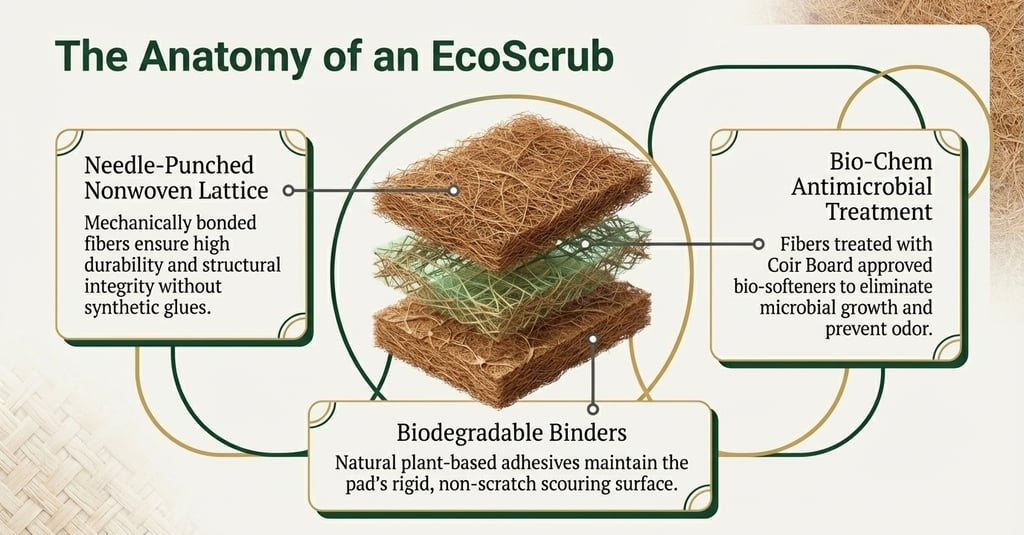
The softened fibres are chopped into 2–3 inch pieces for uniformity. These are then laid in layers and either manually pressed or fed into a needle-punch machine, which interweaves the fibres without any glue to form a solid, flat nonwoven sheet. Natural biodegradable binders can be added for extra firmness.
Step 4: Cutting & Finishing
The formed sheets are cut into standard 4×3 inch rectangles using a simple cutting die or scissors at the micro scale. They are then dried completely in sunlight or using a dryer, inspected for quality, and packed in your branded recycled paper sleeve. That is it — your product is ready to sell.
"You are not making something complicated. You are giving a natural material the form it needs to solve a problem millions of households face every day."
4. Investment & Equipment Breakdown (What Will It Actually Cost You?)
This is the question everyone asks first. Here is an honest, clear breakdown based on real market data.
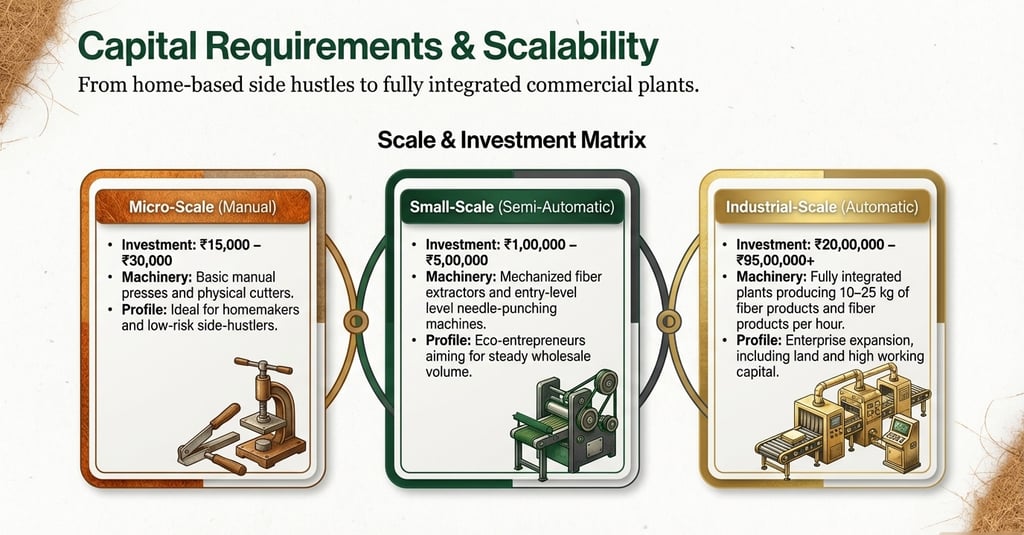
Micro-Scale (Manual) — ₹15,000 to ₹30,000
Equipment: Hand presses, cutters, drying racks, soaking tanks
Output: 50–200 units per day
Best for: Home-based startups, homemakers
Small-Scale (Semi-Automatic) — ₹1,00,000 to ₹5,00,000
Equipment: Mini decorticator, semi-auto needle punch machine, cutting press
Output: 500–2,000 units per day
Best for: Rural entrepreneurs, Self Help Groups (SHGs)
Industrial-Scale (Fully Automatic) — ₹20,00,000 to ₹95,00,000+
Equipment: Fully automatic lines, 10–25 kg/hour capacity plants
Output: 10,000+ units per day
Best for: Established businesses, export units
Key machines to look for:
Decorticator Machine: This is the heart of the operation. It separates coir fibres from the husk. For a beginner, a mini decorticator priced between ₹40,000–₹1,50,000 is sufficient. Look for models on IndiaMART and TradeIndia from suppliers in Kerala and Tamil Nadu.
Needle-Punch Machine: This is what bonds the fibres into a solid pad without any chemicals. Semi-automatic versions start around ₹80,000–₹2,00,000. At the home scale, manual pressing and binding techniques work too.
Pro Tip: Before buying any machine, visit a local coir cluster in Kerala or Tamil Nadu. Many suppliers offer small live demos. You can also rent equipment initially through local co-operatives to test the process before investing.
5. Branding & Selling Your Scrubbers (Where the Real Money Is)
Here is the truth that most business guides skip. The scrubber itself is not where you make big money — the brand is. A loose coir scrubber sells for ₹5–₹10 wholesale. The exact same scrubber in a branded recycled paper sleeve with a story on it sells for ₹50–₹100. That is a 10x difference. Branding is everything in the eco-product space.
Pricing Strategy
Start with a simple formula: your cost per unit (material + labour + packaging) should not exceed 25–30% of your selling price. If each scrubber costs you ₹12 to make and pack, sell it at ₹50 minimum. Sell in packs of 3 or 6 for a higher average order value.
Online Channels (Where Eco Buyers Are)
Amazon India: The biggest opportunity. List under "Kitchen Cleaning" and "Eco-Friendly Sponges". Use keywords like "natural dish scrubber", "plastic-free kitchen", "biodegradable scrub pad". Multipack listings at ₹199–₹499 perform best.
Etsy & Global Markets: If you can handle international shipping, Etsy is a goldmine for handmade eco-products. Buyers in the US and UK actively search for coconut coir products and pay in dollars.
Instagram & WhatsApp Commerce: Build a simple Instagram page. Post short videos of scrubbers in use — cleaning burnt pans, wiping cast iron. Eco content gets shared widely. Add a WhatsApp Business link for direct orders.
Offline Channels (The Hidden Gem)
Zero-waste stores, organic supermarkets, and "green lifestyle" boutiques in Tier-1 cities like Bengaluru, Mumbai, Delhi, Pune, and Hyderabad are actively sourcing local eco-products. Walk in, show your product, and offer them a wholesale price. Many such stores prefer small, local brands over imported ones.
Packaging: The Silent Salesperson
Your packaging must scream "eco" from the shelf. Use recycled kraft paper sleeves, twine or jute ties, and a simple hand-stamp or printed label. Your label should say: 100% Natural · Plastic-Free · Biodegradable · Made in India. This is not just marketing — it is what your customer is paying extra for.
For a deeper dive into eco-branding strategy, check out :How to Launch a Successful Eco-Friendly Brand in India.
6. Legal Checklist: Paperwork Made Easy
The legal side sounds scary but it is actually manageable. Here is what you need, in plain language.
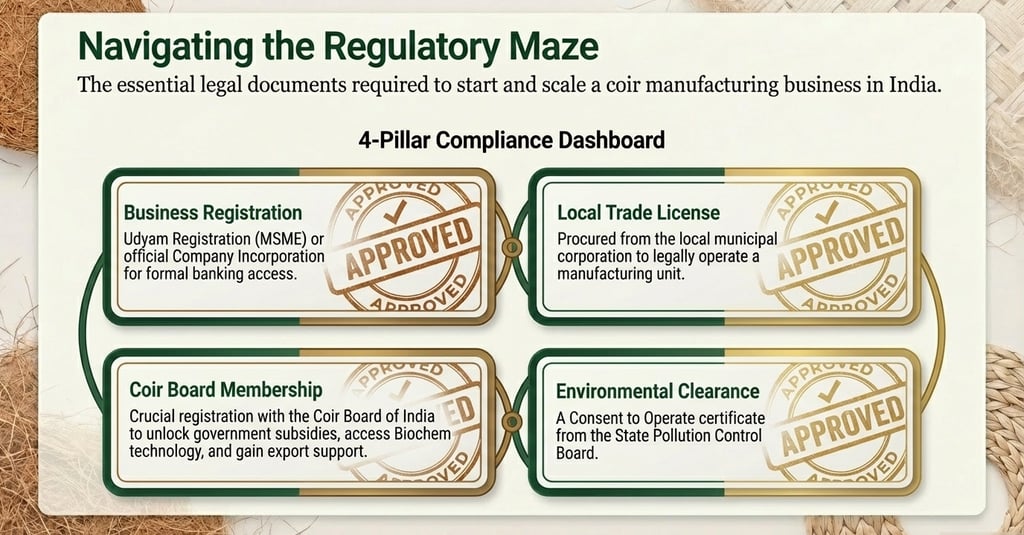
Udyam (MSME) Registration: This is free, online, and done in 15 minutes at udyamregistration.gov.in. Once registered, you get access to government subsidies, loans, and PMEGP grants that can fund 15–35% of your project cost. Do not skip this.
Coir Board of India Registration: This is specific to the coir industry. Register at coirboard.gov.in. Benefits include access to export subsidies, the Coir Board's "Biochem" softening technology, training programmes, and connections to buyer networks in Europe and the US. Highly recommended if you plan to export or scale.
Local Trade License: Get this from your local municipal corporation or Gram Panchayat. Usually costs ₹500–₹2,000 per year. Required to operate any business legally from a premises.
Environmental NOC (Consent to Operate): Required from your State Pollution Control Board if your unit uses machines or chemicals. For micro-scale manual operations, check with your local authority — many home-based units are exempt or have simplified processes.
GST Registration: Mandatory once your turnover crosses ₹20 lakhs. Optional below that, but recommended if you want to sell on Amazon or supply to businesses that need invoices.
7. Common Challenges (And How to Handle Them)
Every business has problems. Here is what will likely come up — and what to do about it.
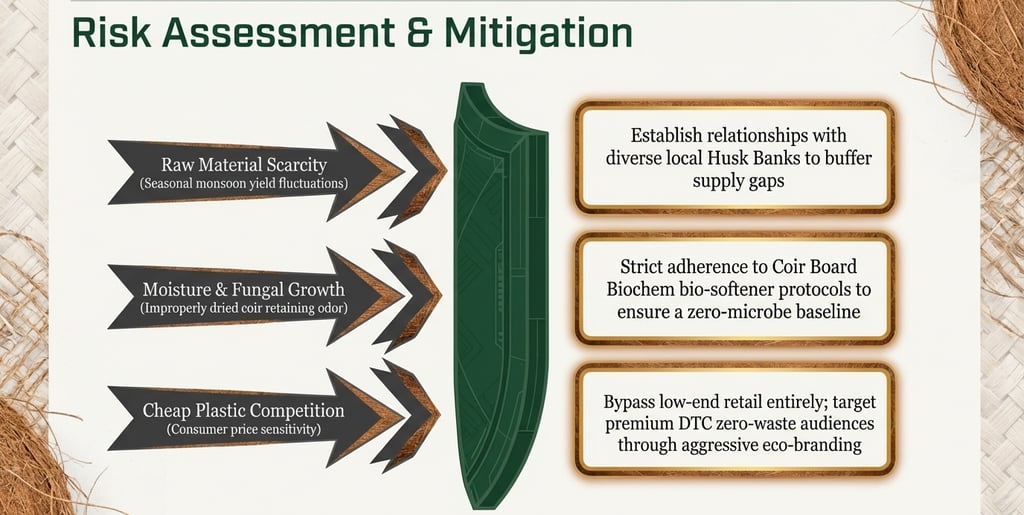
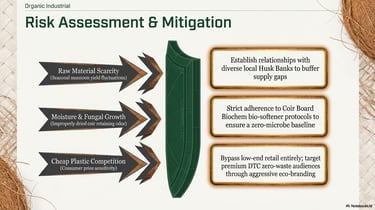
Seasonal Supply: Coconut husks are seasonal. Buy and store in bulk during harvest season (October to February). Build relationships with 2–3 suppliers so you are never dependent on one source.
Moisture & Odour: Improperly dried coir retains moisture and develops fungal odour. Always sun-dry for a minimum of 2 days or use a mechanical dryer. Test each batch before packing.
Competing on Value: Cheap plastic sponges at ₹10 will always exist. Don't compete on price. Compete on story, health benefits, and eco-values. Educate your customer — and they will pay more, happily.
The biggest mistake new entrants make is trying to undercut on price. A plastic sponge at ₹10 will always beat you in a price war. But a natural, health-safe, plastic-free scrubber from a conscious brand? That wins on values. Tell your story. Why did you start? What problem bothered you? Customers who align with your why become loyal buyers, not price-shoppers.
8. Revenue Potential: Is ₹1 Lakh a Month Actually Realistic?
Let us run real numbers. At the small semi-automatic scale:
Daily Production: 500 scrubbers
Cost per unit: ₹10 (raw material + labour + packaging)
Selling price: ₹50 wholesale / ₹80 direct-to-consumer
Monthly output: ~12,000–15,000 units (working 25 days)
Monthly Revenue (wholesale): ₹6,00,000
Monthly Revenue (direct-to-consumer online): ₹9,60,000
Net Profit (after all costs): ₹1,20,000 – ₹2,00,000 per month
At the micro-scale, starting from home with manual production, a realistic first-month revenue target is ₹20,000–₹50,000, scaling to ₹1 lakh+ within 6 months as you build your customer base and streamline production. The numbers work — if you do the work.
Frequently Asked Questions
Can I start a coconut coir scrubber business from home without any machines?
Yes, absolutely. At the very basic level, you can source pre-processed coir fibre (already extracted) from suppliers on IndiaMART and form scrubbers manually using simple moulds and hand presses. Many home-based entrepreneurs start this way with less than ₹15,000. As you grow, you invest in machines.
Where can I get government subsidies for a coir business in India?
Two main sources: (1) PMEGP (Prime Minister's Employment Generation Programme) via KVIC — covers up to 35% of project cost as a subsidy for rural applicants. (2) Coir Board of India schemes — including the Coir Vikas Yojana, which provides training, equipment support, and market linkage. Register at coirboard.gov.in and kviconline.gov.in.
How do I prevent my coir scrubbers from smelling bad?
This is the most common quality issue. The solution is thorough drying — coir must be dried completely (below 12% moisture content) before packing. Sun-drying for 2–3 days works well. You can also treat fibres with a mild citric acid rinse before final drying to neutralise any residual odour. Never pack moist scrubbers.
Coconut coir scrubber banane ki machine kahan milti hai? (Where to find the machine?)
IndiaMART, TradeIndia, and direct suppliers in Alappuzha (Kerala) and Coimbatore (Tamil Nadu) are the best sources. Search for "coir scrubber making machine", "mini decorticator", or "needle punch machine for coir". Always ask for a demo and check warranty before purchasing.
Can I export coconut coir scrubbers from India?
Yes! Coir products have strong export demand in Europe, the US, and Japan. To export, register with the Coir Board of India (mandatory for coir exporters), get an Importer-Exporter Code (IEC) from DGFT, and list on platforms like Alibaba or connect with buying agents. The Coir Board also facilitates direct buyer connections.
Is this business suitable for women sitting at home? (Ghar baithe ladies ke liye suitable hai?)
This is one of the most recommended home-based manufacturing businesses for women. The micro-scale process requires no heavy machinery, no chemicals, and no technical background. Many Self Help Groups (SHGs) in Kerala and Tamil Nadu run successful coir scrubber units. It pairs well with selling directly via WhatsApp, Instagram, or local markets.
Conclusion & Next Steps
From a coconut husk that a farmer would otherwise burn, you can build a business that generates ₹1 lakh or more every month. The raw material is nearly free. The demand is real and growing. The investment to start is lower than almost any other manufacturing business in India. And the margins — once you build a brand — are genuinely impressive.
The eco-economy is not a trend. It is a direction. And the coir scrubber sits right at the intersection of sustainability, rural livelihoods, and urban consumer demand.
You have the idea. You have the numbers. You have the roadmap.
Explore our Article: How to Launch a Successful Eco-Friendly Brand in India.
Need Help with business Registration and compliance? Visit Our Services page.
Connect:
Get in touch with our expert team.
Follow us:
bizzaccelera@gmail.com
+91-9313528947
© 2025. All rights reserved.
Join Our News Letter
Disclaimer : The information provided on Bizz Accelera is intended for general informational and educational purposes only.