
Loofah Soap Business from Home: Steps, Cost & Profit
Start your loofah soap business from home with low investment. Complete guide on manufacturing, branding, licenses & selling on Amazon, Instagram & more.
BUSINESS IDEAS
Bizz Accelera
4/4/202611 min read
Introduction: The Rise of Functional Skincare
Scroll through Instagram for five minutes. What do you see? Aesthetic flat lays, satisfying soap pours, and gorgeous handmade products that make you want to buy immediately. One product keeps showing up again and again — the loofah soap bar.
And honestly? It makes perfect sense.
Today's skincare buyer doesn't want just a soap. They want an experience. They want something that looks beautiful, feels luxurious, and actually works. That's exactly why "aesthetic + functional" products are dominating both Instagram feeds and Amazon bestseller lists right now.
So, what exactly is a loofah soap?
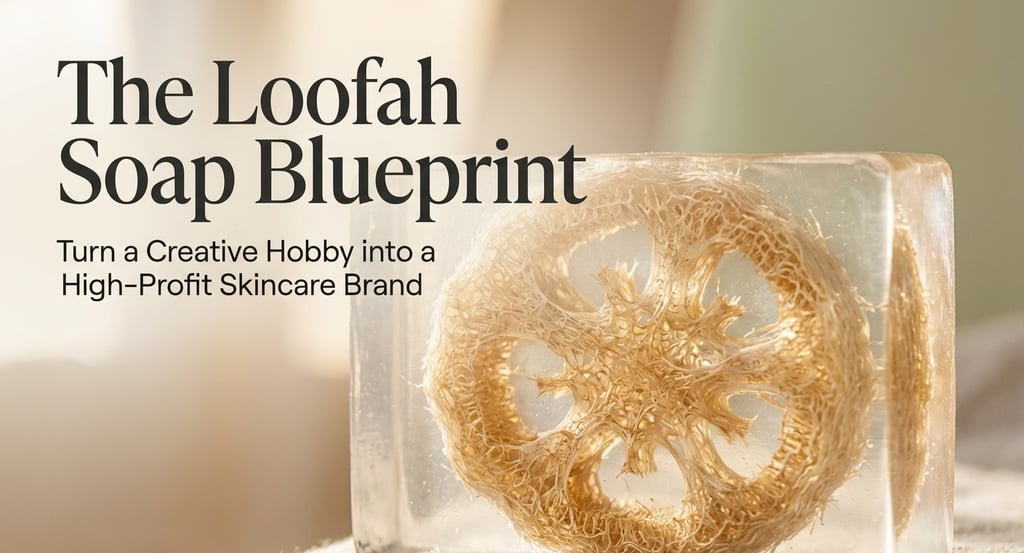
Simply put, it's a 2-in-1 skincare powerhouse. A natural dried loofah slice is embedded inside a transparent glycerin or goat milk soap base. When you use it, the soap cleanses your skin while the loofah gently exfoliates — removing dead cells, unclogging pores, and improving blood circulation. All in one bar. No separate scrub needed.
And here's the timing question: why now?
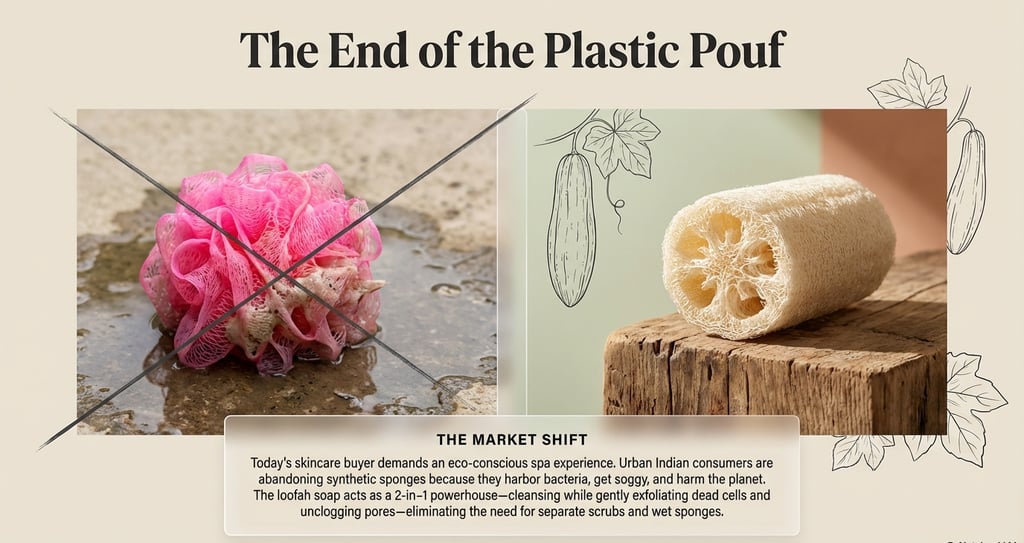
Because people are done with plastic bath poufs and synthetic sponges. They get soggy. They harbor bacteria. They're bad for the planet. Consumers — especially in urban India — are actively shifting to biodegradable, plant-based alternatives. Loofah soap sits right at that intersection of eco-conscious and premium.
Can I start a soap business from home? Yes, absolutely. The Melt & Pour model makes this possible for anyone — no heavy machinery, no lab, no chemistry degree. Your kitchen is your first factory. We'll cover exactly how in a bit.

Why Loofah Soaps Are a "Goldmine" Business Idea
Let's talk about money first. Because a great product that doesn't make profit is just a hobby.
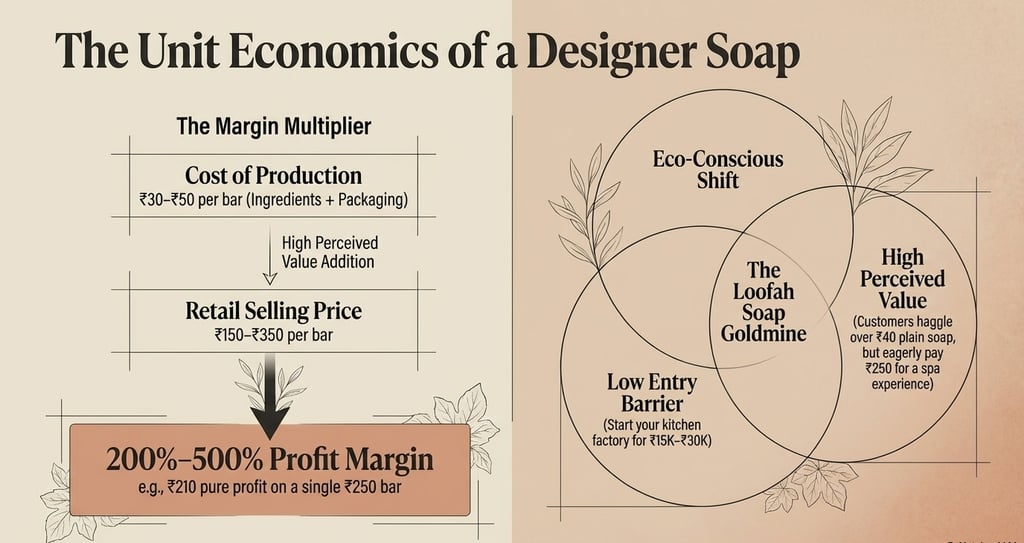
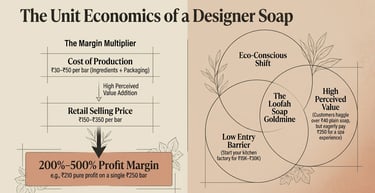
Here's the thing about loofah soaps — customers genuinely perceive them as premium. They'll pay ₹250 for a designer loofah bar without blinking, but they'll haggle over a ₹40 plain soap. Why? Because the loofah soap looks expensive. It feels like a spa product. It solves two problems at once.
That's called high perceived value, and it's your biggest business advantage.
The second advantage? Low entry barrier. Unlike most manufacturing businesses, you don't need a factory setup. A double boiler, silicone molds, good quality soap base, and some essential oils — that's your starting inventory. Any homemaker, college student, or side-hustle seeker can get started with ₹15,000 or less.
The third advantage is the market gap this product fills. Think about the "soggy sponge" problem. Bath loofahs and sponges sitting wet in the bathroom are a breeding ground for bacteria. Loofah soap solves this hygienically — the loofah is embedded in soap, used, and stored dry. It's cleaner, smarter, and customers love that logic.
The handmade soap market in India is thriving right now. Consumers are increasingly willing to pay a premium for natural, chemical-free alternatives to mass-produced soaps. And within that growing market, designer loofah soaps are one of the most differentiated products you can offer.
The "Melt & Pour" Manufacturing Guide (Step-by-Step)
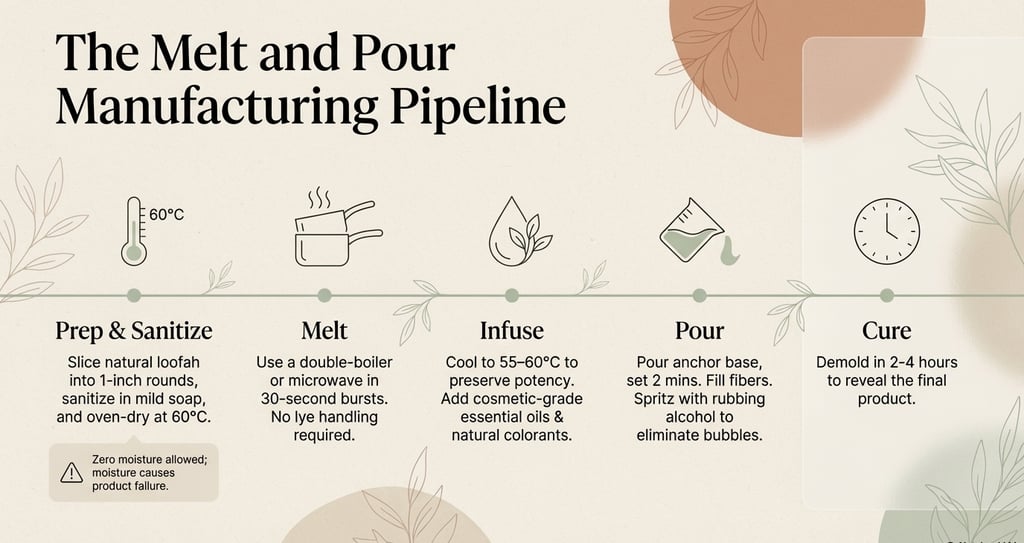
This is the part where things get exciting. The melt and pour soap method is the most beginner-friendly approach for home-based startups. No lye handling. No complicated chemistry. Just clean, creative crafting.
Here's your complete step-by-step guide to making premium exfoliating loofah soaps at home:
Step 1 — Choose Your Soap Base
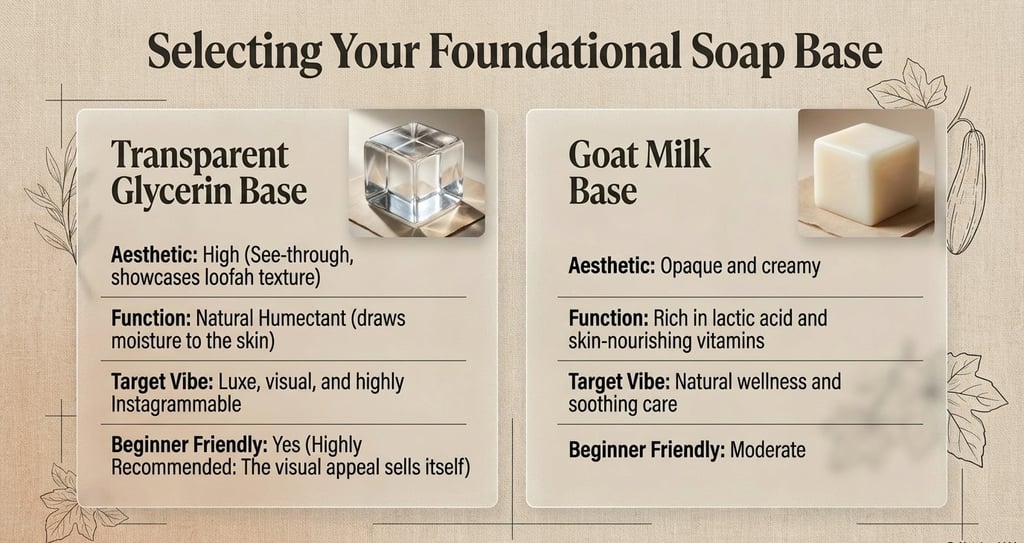
You have two great options:
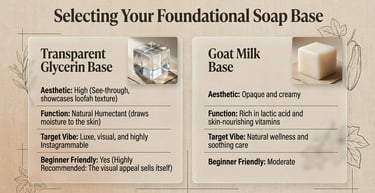
Transparent Glycerin Base: Creates that beautiful see-through look where the loofah is fully visible inside. Glycerin is a natural humectant, meaning it draws moisture to the skin. Perfect for a luxe, aesthetic finish.
Goat Milk Base: Opaque, creamy, and incredibly skin-nourishing. Rich in lactic acid and vitamins. Great for a more "natural wellness" positioning.
For beginners, transparent glycerin is recommended because the visual appeal sells itself.
Step 2 — Loofah Prep
This step is crucial and often overlooked. Poor loofah preparation leads to bacteria, odor, and product failure.
Source 100% natural, pesticide-free dried loofah (more on sourcing later).
Slice into uniform 1-inch thick rounds using a sharp knife.
Sanitize by soaking briefly in a mild soap solution, then oven-dry at low heat (around 60°C) for 20–30 minutes.
The loofah must be completely dry before use. Even slight moisture will ruin your soap.
Step 3 — Infusion (Where the Magic Happens)
Melt your soap base using a double boiler or microwave (in 30-second intervals). Once melted:
Add essential oils — Lavender for calming properties, Lemongrass for freshness and antibacterial benefits, or Tea Tree for acne-prone skin.
Add natural colorants — Turmeric for yellow, spirulina for green, rose clay for pink. Keep it natural.
Add Vitamin E oil for skin nourishment and extended shelf life.
Keep temperatures around 55–60°C when adding these ingredients to preserve their potency.
Step 4 — Pouring and Setting
Place your sanitized loofah slice into the silicone mold.
Pour a small base layer of melted soap first — let it partially set for 2–3 minutes (this anchors the loofah).
Then pour the remaining soap over the loofah, pressing gently to ensure it fills all the fibers completely.
Tap the mold lightly to remove air bubbles. Spritz with rubbing alcohol to eliminate surface bubbles.
Silicone molds give you the "designer" look — rectangular, round, floral, whatever fits your brand aesthetic.
Step 5 — Curing and Preventing "Soap Sweat"
This is the secret that most beginners miss.
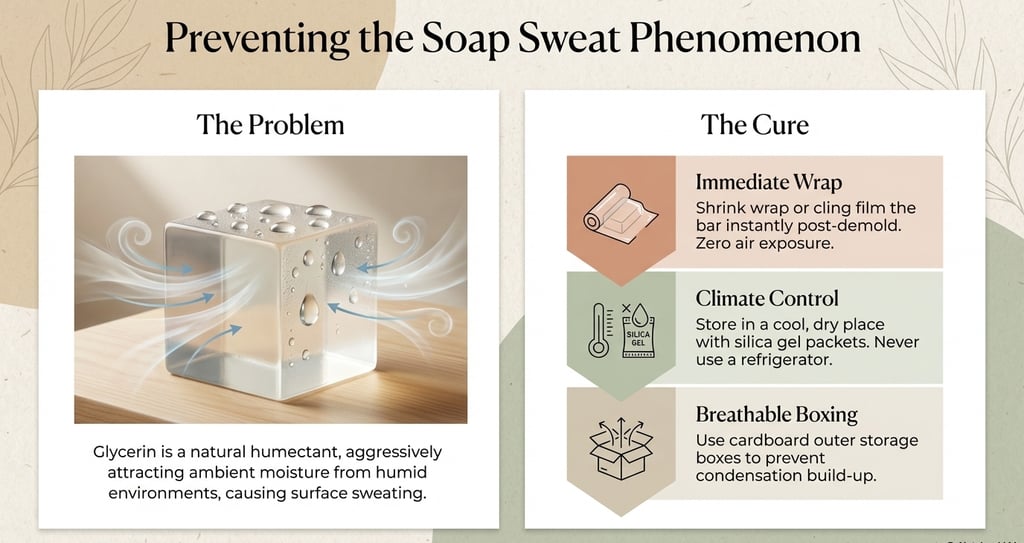
Glycerin soaps "sweat" — they attract moisture from the air and develop water droplets on the surface. In humid Indian weather, this is a real problem. Here's how to handle it:
After demolding (2–4 hours after pouring), immediately wrap the soap in shrink wrap or cling film. Don't leave it exposed to air.
Store in a cool, dry place — not in the refrigerator (temperature changes cause sweating).
Use silica gel packets in your storage area to absorb excess humidity.
Avoid storing near windows or in bathrooms where steam and heat fluctuate constantly.
Proper curing gives your soap a smooth surface, long-lasting fragrance, and a shelf life of up to 12 months.
Investment & Profitability Analysis
Let's break down the numbers so you know exactly what you're getting into.
To start at the basic level, here's what you'll spend on each item:
Soap Base (Glycerine or Goat Milk) will cost you around ₹2,000–₹4,000. Natural Loofah sourced wholesale comes to approximately ₹1,500–₹3,000. For Essential Oils and Colorants, budget around ₹2,000–₹4,000. Silicone Molds will set you back ₹1,000–₹2,000. Packaging Materials cost around ₹2,000–₹4,000, and Equipment and Miscellaneous expenses add another ₹2,000–₹3,000. This brings your basic total to roughly ₹10,500–₹20,000.
If you're going the semi-professional route, the numbers scale up. Soap Base costs ₹5,000–₹8,000, Natural Loofah runs ₹3,000–₹5,000, Essential Oils and Colorants come to ₹4,000–₹7,000, and Silicone Molds cost ₹2,000–₹4,000. Packaging Materials — which include branded boxes and premium wrapping — jump to ₹8,000–₹15,000, and Equipment and Miscellaneous adds ₹5,000–₹10,000. Your semi-professional total lands at ₹27,000–₹49,000.
Most beginners comfortably start with ₹15,000–₹30,000. The semi-professional setup, which typically runs ₹40,000–₹75,000, includes branded packaging and an initial digital marketing spend to get your first customers in the door.
Unit Economics — Your Per-Bar Profit:
Cost of Production: ₹30–₹50 per bar (ingredients + packaging)
Selling Price: ₹150–₹350 per bar
Profit Margin: 200%–500% per unit
That's not a typo. A ₹40 cost bar sold at ₹250 gives you ₹210 profit. Make 50 bars a day and do the math.
The Upsell Strategy — Gift Hampers
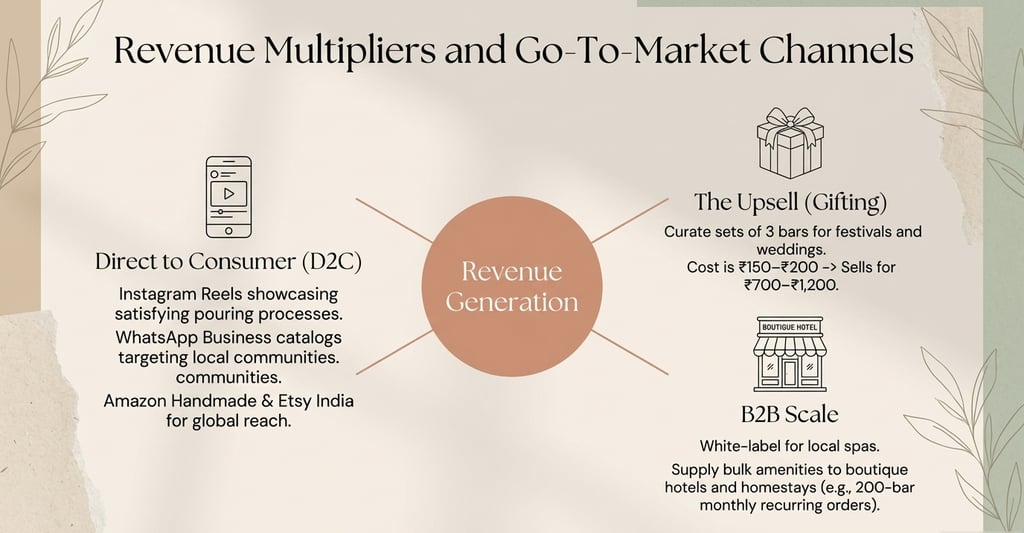
Here's where smart entrepreneurs double their profits. Wedding favors, corporate gifting, and festival hampers are massive in India. A curated gift box with 3 loofah soap bars, wrapped beautifully, sells for ₹700–₹1,200. Your cost? ₹150–₹200. The gifting market practically runs itself during Diwali, wedding season, and corporate Q4.
Branding & Marketing for Success
Here's an honest truth: in the handmade soap business, packaging and photography are 80% of the sale.
Your product could be phenomenal, but if your Instagram photo looks like it was taken in bad lighting on a cluttered table, no one will buy. Period.
Photography Tips:
Use natural daylight (morning light near a window is free and beautiful).
Keep backgrounds clean and minimal — white marble, wooden boards, dried flowers.
Show the loofah texture clearly. Let people see what they're buying.
Shoot from multiple angles: top-down, 45-degree, and close-up macro shots.
Where to Sell Your Loofah Soaps:
Direct Channels:
Instagram — Post Reels of your pouring process. Satisfying soap-making videos get thousands of organic views. Sell via DMs and link in bio.
WhatsApp Business — Create a catalog. Share in local communities and mom groups. This is still one of the highest-converting channels for Indian home businesses.
Online Marketplaces:
Amazon Handmade — Growing fast in India. Customers trust Amazon. Great for scaling once you have reviews.
Etsy India — The global handmade marketplace. Ideal for eco-gifting and premium positioning.
B2B Opportunities (The Real Revenue Multiplier):
Boutique Hotels — Small boutique hotels and homestays actively seek local, natural amenities. A bulk order of 200 bars monthly is not unusual.
Spas and Salons — White-label your product. They put their brand name on it. You produce.
Organic Gift Shops — Approach local stores with a sample kit. Many are looking for unique Indian-made products to stock.
Navigating Licenses & Legalities
This section matters. Skipping legalities is the fastest way to shut down a growing business.
Here's what you need:
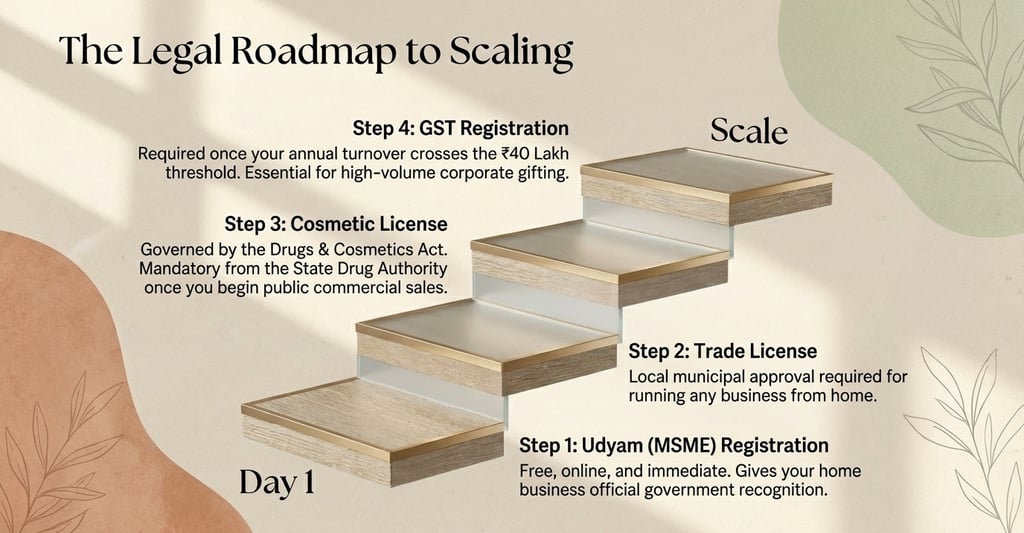
1. Udyam (MSME) Registration Free, online, and gives you access to government schemes, subsidies, and priority lending. Do this first. It gives your home business official recognition.
2. Cosmetic License (Drugs & Cosmetics Act) Any product applied to the human body for cleansing or beautifying is classified as a "cosmetic" under the Drugs & Cosmetics Act, 1940. Soaps fall under this. For home-based small-scale production, you typically need a cosmetic manufacturing license from your State Drugs Control Authority. The requirements vary slightly by state, so check your local authority's website. This is a non-negotiable step before selling publicly at scale.
3. Trade License Your local municipal corporation requires this for running any business — even from home. It's usually inexpensive and straightforward. Check with your city's municipal office.
4. GST Registration Mandatory once your annual turnover exceeds the threshold (currently ₹40 lakh for most states for goods). If you're gifting-focused and selling high volumes, register early to avoid complications.
Is a cosmetic license required for selling handmade soaps from home? Yes — once you're selling to the public commercially, you need to comply. Starting small and selling to friends is different from building a brand, listing on Amazon, and supplying hotels.
Solving Common Problems (Expert Tips)
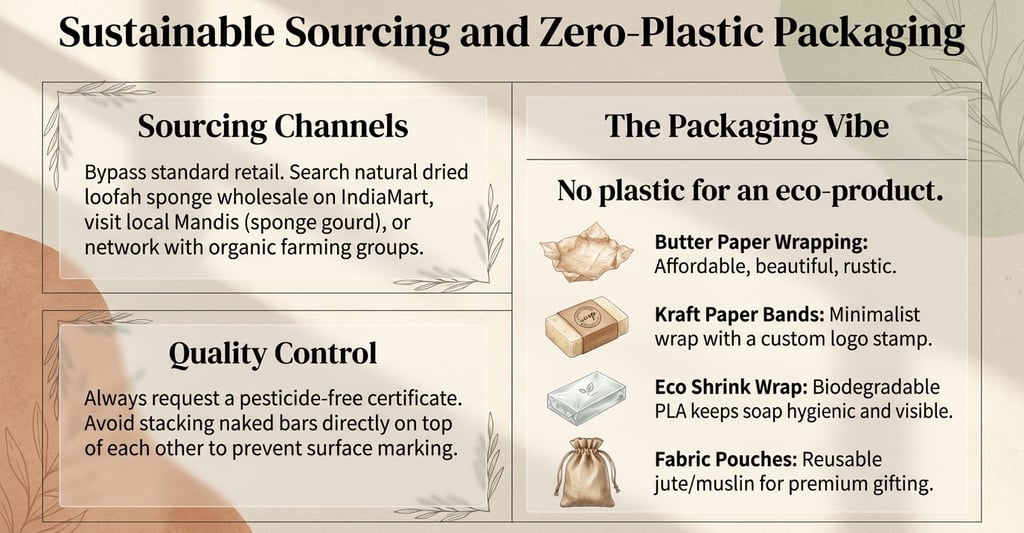
Sourcing: Where to Find Wholesale Natural Loofah in India
Finding 100% natural, pesticide-free loofah is the number one pain point for new soap makers. Here's where to look:
IndiaMart and TradeIndia — Search "natural dried loofah sponge wholesale India." Compare suppliers from Gujarat, Rajasthan, and Tamil Nadu.
Local Agriculture Markets (Mandis) — Sponge gourd (turai/tori) is grown widely in India. Dried loofah can be sourced directly from farmers in rural belts at significantly lower costs.
Organic Farming Communities — Facebook groups and WhatsApp communities of organic farmers often have surplus dried loofah for sale.
Always ask for a pesticide-free certificate or natural farming confirmation from suppliers.
Storage: Keeping Your Soaps Fresh for 12 Months
Wrap immediately after demolding in shrink wrap or cling film.
Store in cardboard boxes — cardboard breathes slightly and prevents condensation.
Use silica gel packets to control humidity.
Keep in a cool, dark place — not the kitchen (too much steam) and not outdoors.
Avoid stacking too many bars directly on each other; it can cause surface marking.
Packaging: Eco-Friendly Options
Customers buying natural loofah soaps expect sustainable packaging. Don't put your eco-product in plastic.
Butter Paper Wrapping: Affordable, beautiful, rustic look. Great for markets and gifting.
Kraft Paper Bands: Simple band wrap around the soap bar with your logo stamp. Minimal and premium looking.
Eco Shrink Wrap: Biodegradable PLA shrink wrap is now available in India. Keeps the soap hygienic and visible while staying eco-conscious.
Fabric Pouches: Small jute or muslin pouches with a soap bar inside — premium gifting product that customers keep and reuse.
FAQ — Your Questions Answered
Q1. Ghar se sabun banane ka business start karne ke liye kitna paisa chahiye? You can start with ₹15,000–₹30,000 for a basic home setup. This covers raw materials, molds, packaging, and basic equipment. A more professional setup with branded packaging runs ₹40,000–₹75,000.
Q2. Is it legally okay to sell handmade soaps from home in India? Yes, but with proper registration. You need MSME (Udyam) registration, a cosmetic manufacturing license from your State Drug Authority, and a local trade license. Once turnover crosses the threshold, GST registration is mandatory too.
Q3. How do I prevent my glycerine soap from sweating in Indian weather? Wrap your soap immediately after demolding in cling film or eco shrink wrap. Store in a cool, dry place away from steam and sunlight. Use silica gel packets in your storage space. Avoid refrigerating as temperature changes accelerate sweating.
Q4. Kam paison mein designer loofah soap kaise banaye? The Melt & Pour method is your answer. No machines needed. Buy a transparent glycerin soap base (₹300–₹500 per kg), wholesale loofah, basic essential oils, and silicone molds. You can make 20–25 bars per kg of base with a production cost of ₹30–₹50 per bar.
Q5. Where can I sell loofah soaps online in India? Instagram (Reels + DMs), WhatsApp Business catalogs, Amazon Handmade India, and Etsy India. B2B channels like boutique hotels, spas, and organic stores are excellent for bulk orders.
Q6. What essential oils work best for loofah soaps? Lavender (relaxing, bestseller), Lemongrass (antibacterial, fresh), Tea Tree (acne-prone skin), Peppermint (energizing), and Rose Geranium (floral, gifting-friendly). Always use cosmetic-grade essential oils, not aromatherapy diffuser oils.
Q7. How long does a loofah soap last on the shelf? With proper wrapping and storage, loofah soaps last 10–12 months. The glycerin base preserves the loofah inside. However, once the customer starts using it, it should ideally be used within 4–6 weeks for hygiene reasons.
Q8. Can I sell loofah soaps to hotels and spas without a big setup? Yes. Start with a sample kit — 5–6 bars in your best variants, well packaged, with a basic rate card. Approach boutique hotels, wellness resorts, and organic spas directly. Many actively prefer sourcing from local artisanal brands over mass-market suppliers.
Conclusion & Your Next Steps
Here's the reality: you don't need a business degree, a factory, or a huge budget to build a successful loofah soap brand. You need a good product, smart positioning, and the willingness to start.
The handmade loofah soap manufacturing business sits perfectly at the intersection of three massive trends — natural skincare, eco-conscious living, and premium gifting. The margins are real. The demand is growing. The entry barrier is genuinely low.
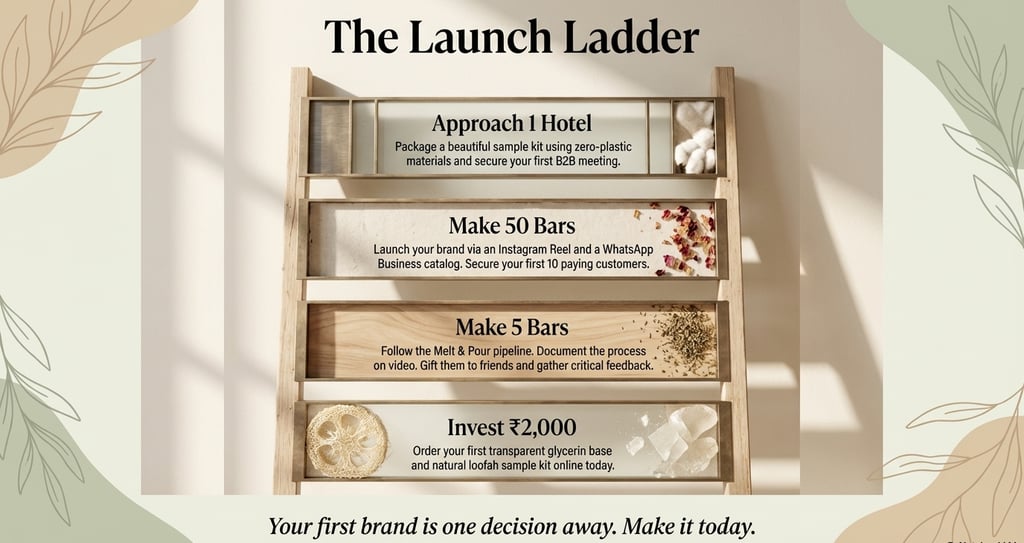
Your journey looks like this: Start with 10 bars. Gift some to friends and family. Take feedback. Fix what doesn't work. Make 50 bars. Sell on WhatsApp and Instagram. Get your first 10 paying customers. Register your MSME. Launch on Amazon Handmade. Approach one boutique hotel. Repeat.
That's how a kitchen experiment becomes a skincare brand.
Your Action Steps Starting Today:
Order a sample loofah soap base kit online (IndiaMart or Amazon) — budget ₹2,000–₹3,000 for your first experiment.
Make your first 5 bars using this guide. Document the process on video.
Share the video as a Reel. See the response.
And when you're ready to take this from a home project to a full brand, read our master guide: How to Launch an Eco-Friendly Brand in India — covering everything from packaging design to D2C website setup.
Looking for something different? Discover high-potential ideas with low start-up costs: Start a Coir Scrubber Business Under ₹25,000.
Need help with Business registration and Compliance? contact Us Today.
Connect:
Get in touch with our expert team.
Follow us:
bizzaccelera@gmail.com
+91-9313528947
© 2025. All rights reserved.
Join Our News Letter
Disclaimer : The information provided on Bizz Accelera is intended for general informational and educational purposes only.