
How to Start a Soy Milk Manufacturing Business in India | ₹30 to ₹300 Guide
Learn how to start a soy milk manufacturing business in India with as little as ₹15,000. Complete guide covering manufacturing process, FSSAI licenses, machinery costs, profit margins, and government loan schemes like PMEGP and MUDRA. Turn ₹30 production cost into ₹300 retail value.
BUSINESS IDEAS
Bizz Accelera
4/7/202610 min read
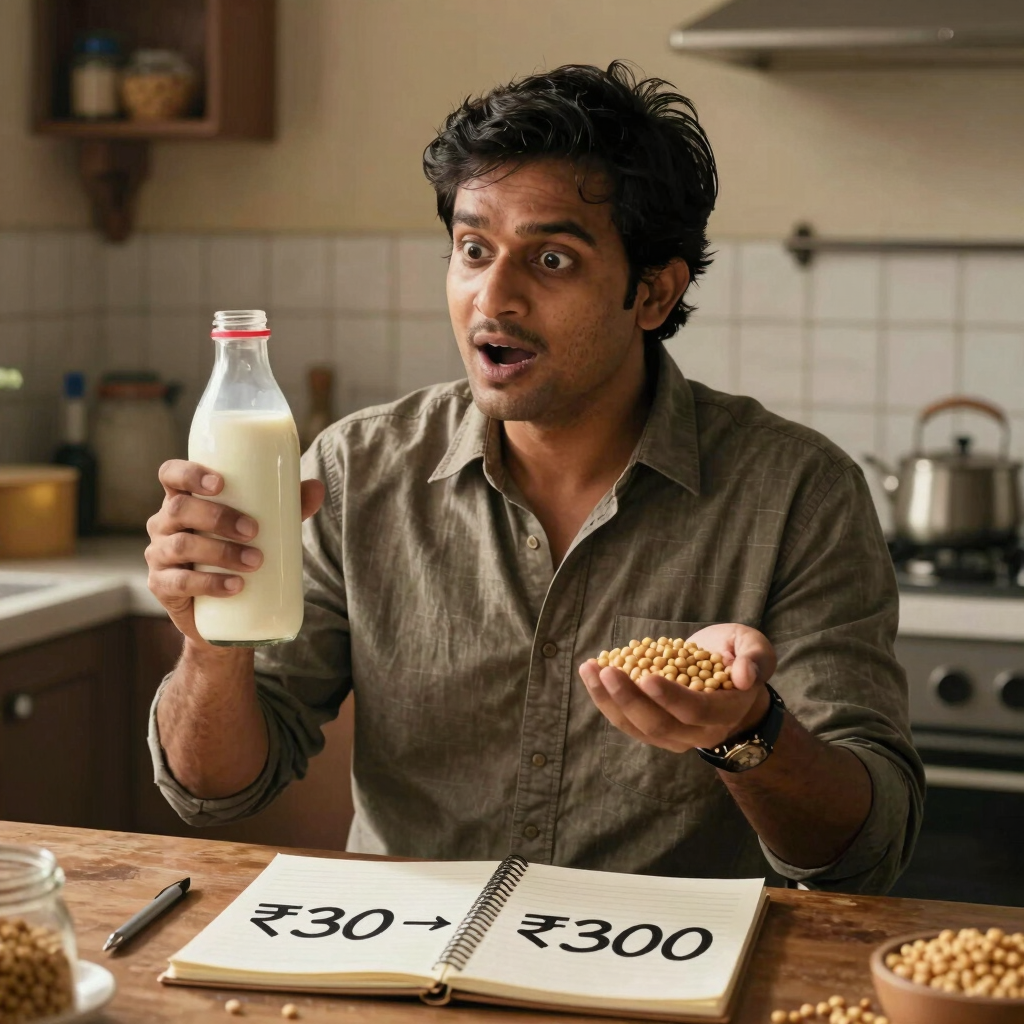
What If Your Kitchen Could Print Money?
Here's a number that should stop you mid-scroll: ₹30 to ₹300.
That's not a typo. That's the gap between what it costs to make one litre of soy milk and what fitness-conscious consumers in Indian cities are happily paying for it right now.
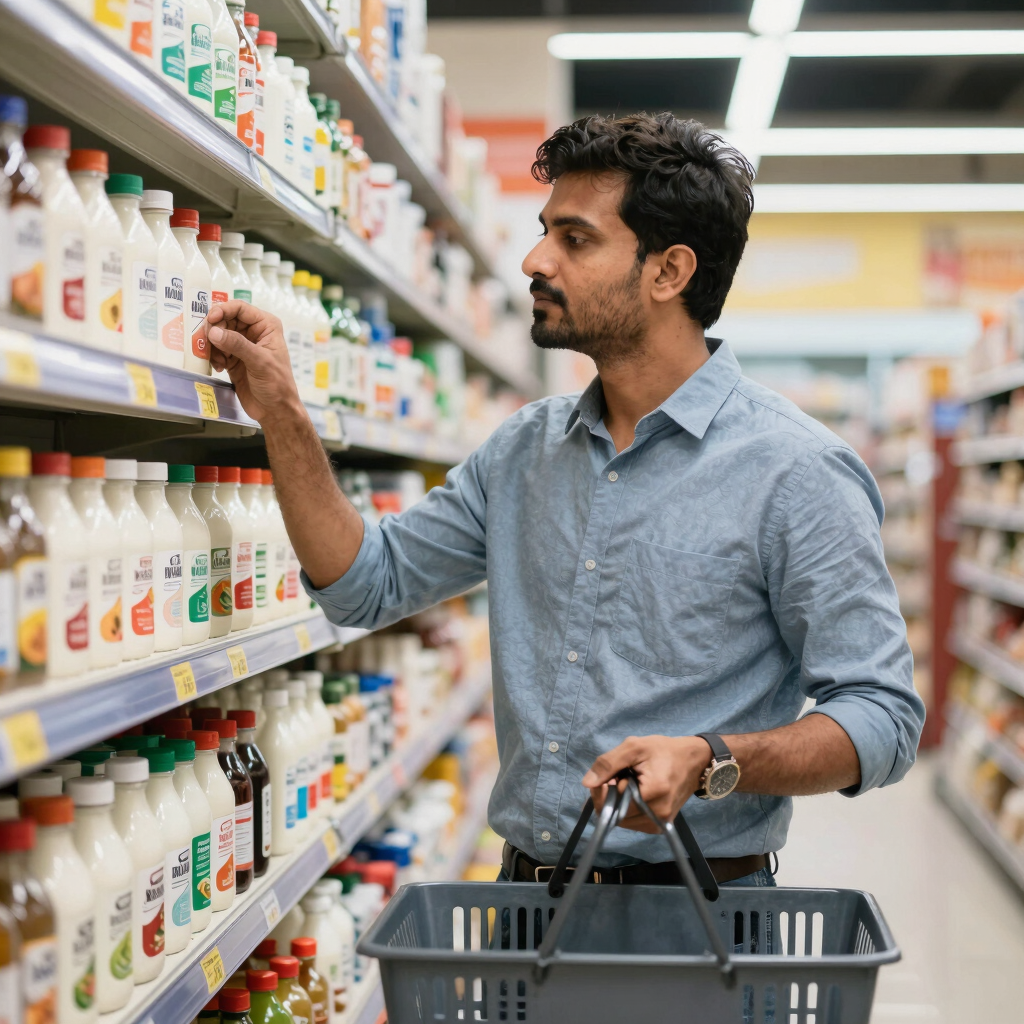
A bottle of Sofit or Hershey's soy milk sitting on a supermarket shelf in Mumbai or Delhi can retail for ₹300 to ₹400 per litre. The soybeans that go into making that same litre? They cost you roughly ₹20 to ₹30. Same product. Significantly different prices. And the brands collecting that margin are mostly large corporations — not small local entrepreneurs like you.
That's the opportunity hiding in plain sight.
India is quietly sitting on top of a plant-based milk revolution. Nearly 60% of Indians are lactose intolerant to some degree, meaning cow's milk causes them discomfort — and many of them don't even know it. Layer on top of that a fast-growing urban vegan movement, a fitness boom in Tier-1 and Tier-2 cities, and rising health consciousness among millennials and Gen Z. The demand is real. The gap in affordable, fresh, locally-made soy milk is very real. And the competition? Honestly, it's thinner than most people think.
This article is your complete, no-fluff, ground-level guide to starting a soy milk manufacturing business in India — whether you have ₹15,000 or ₹5 lakh to invest. We'll walk you through the manufacturing process step by step, break down the real numbers, cover every legal license you need, help you solve the infamous "beany taste" problem, and give you a launch checklist you can act on this week.
Let's get into it.
Why Soy Milk? The Real Numbers Behind the Buzz
Before you invest a single rupee, you need to understand why this business makes sense right now — not five years ago, not five years from now. Right now.
The cost math is genuinely exciting. Soybeans are one of India's most abundantly grown crops. States like Madhya Pradesh, Maharashtra, and Rajasthan are major producers, which means raw material supply is stable and cheap. On average, you can manufacture one litre of soy milk for ₹20 to ₹30, including soybeans, water, energy, and basic flavoring. That same litre, branded properly and sold to a gym or health café, fetches ₹150 to ₹300. Sold through a D2C subscription model? Even more.
Profit margins range from 20% at the conservative end to 50% or more if you brand smartly and target the fitness segment. That's food business margins that most traditional dairy or snack businesses would envy.
The health angle gives you a permanent tailwind. Soy milk contains approximately 3.3% protein per serving — comparable to cow's milk. It has zero cholesterol, is naturally lactose-free, and is considered heart-friendly. For gym-goers trying to hit their protein macros without dairy, for diabetic patients managing cholesterol, for households with lactose-intolerant children — soy milk solves a real, daily problem. That's not a trend. That's a need.
And don't ignore the by-product. When you make soy milk, you're left with okara — the protein-rich soybean pulp. Most beginners throw this away. Smart manufacturers sell it. Okara can be sold to poultry farms as high-protein animal feed, used by bakeries as a flour substitute, or even packaged as a health ingredient. It's essentially free revenue from something you'd otherwise discard.


The Soy Fresh Wellness Model: A Mini Business Plan You Can Steal
You don't need an MBA to plan this. Here's a simple but solid business model template you can adapt.
Brand Concept: Position yourself as the fresh, local, affordable alternative to expensive imported soy milk brands. Your edge over Sofit or Hershey's isn't a bigger marketing budget — it's freshness, local flavours, and price.
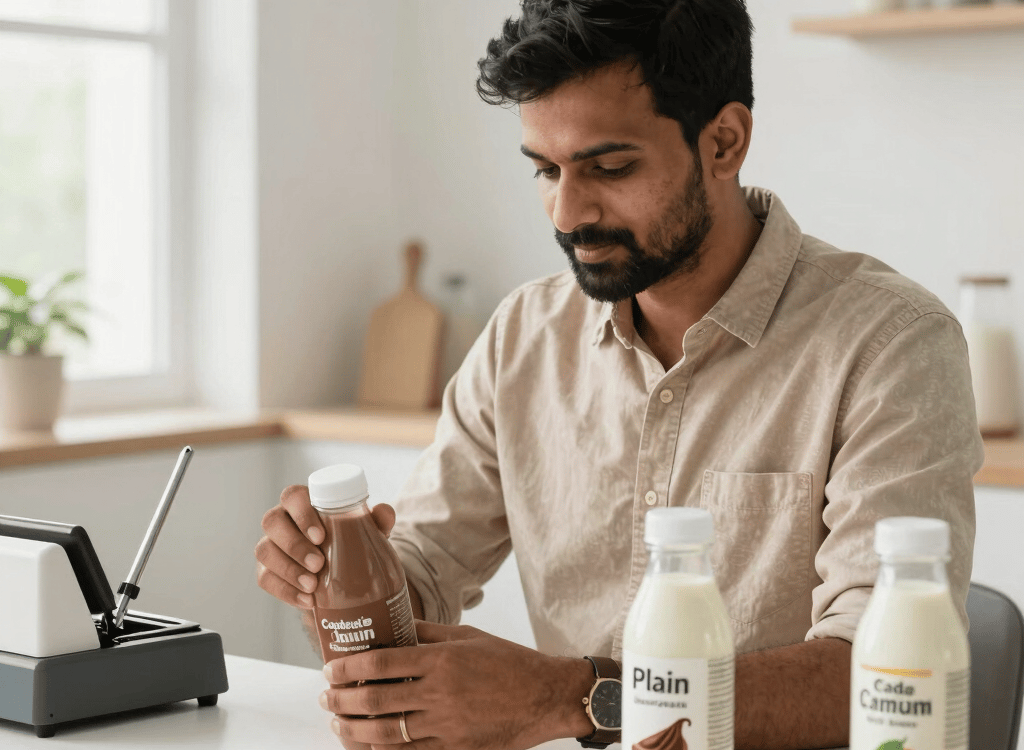
Product Line to Start With: Don't overcomplicate it. Launch with three variants — Plain (for the purist crowd), Chocolate (for kids and gym post-workout), and Cardamom (for the desi household that wants something familiar). Once you have traction, add Vanilla or Rose. Keep it simple in Year 1.
Derivatives to Add Later: Once you're comfortable with soy milk production, add tofu (soya paneer) to your line-up. Tofu uses the same soybeans and equipment. It commands a strong price in urban markets and is in serious undersupply in most smaller cities.
Who You're Selling To: Think in three buckets. First, fitness enthusiasts and gym members who want protein-rich, dairy-free options — they'll pay premium prices. Second, dairy-free and vegan families looking for an everyday milk alternative at a reasonable price. Third, local gyms, health cafés, and juice bars who need a reliable B2B supplier they can trust.
This three-bucket approach helps you balance volume (household supply at ₹60–80/litre) with premium margins (fitness market at ₹200–300/litre).
Investment and Machinery: What Do You Actually Need to Spend?
Here's the honest breakdown.
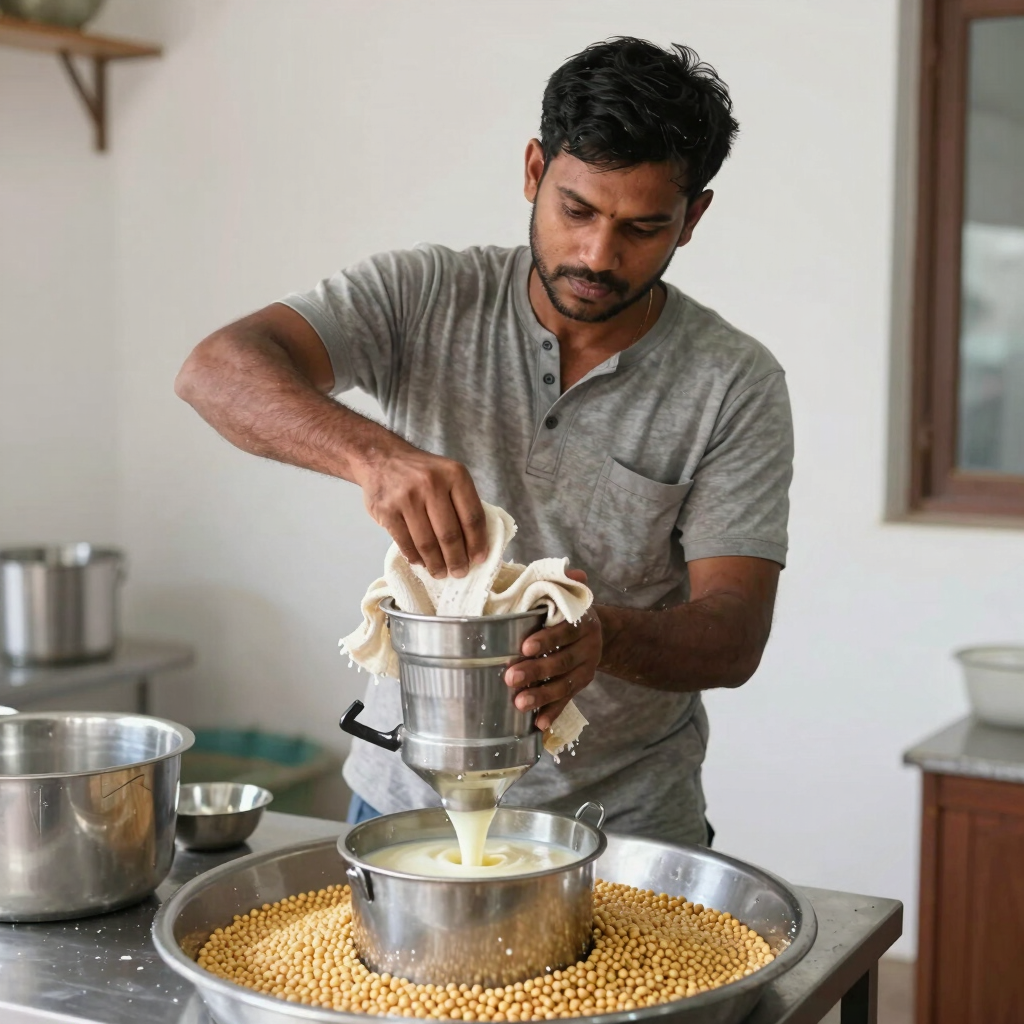
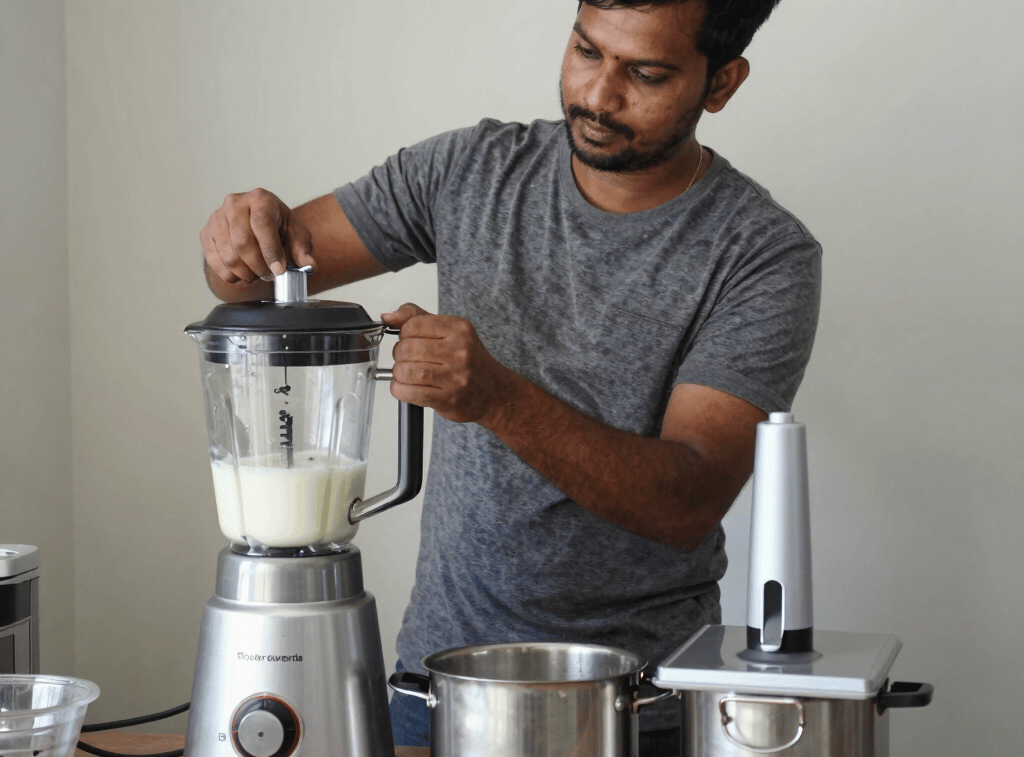
Micro/Cottage Scale (₹15,000 – ₹45,000): A basic wet grinder (₹8,000–15,000), a large stainless steel boiling vessel, basic filtration cloth, and a manual pouch sealer. This setup works for home-based production supplying 20–50 litres a day to nearby gyms, tiffin networks, or local households. No bank loan needed. You can start this week.
Small-Scale Industrial (₹1,20,000 – ₹5,50,000): An automatic soy milk and tofu making machine (available on IndiaMART from multiple Indian manufacturers), commercial boiling kettles, a pulp separator, and a basic pouch or bottle packaging machine. This handles 50 to 200 litres per hour and is the right scale for supplying multiple gyms, cafés, or a small retail brand. PMEGP or MUDRA loans can cover 80–90% of this cost.
Pro Tip: Don't buy industrial equipment before validating demand. Start micro, get your first 5 clients, prove the product, then upgrade. Many entrepreneurs make the mistake of buying a ₹3 lakh machine before they have a single confirmed order. Validate first. Invest second.
Looking for another profitable home business under ₹25,000? See how a coir scrubber unit works.
The Real Financial Picture: What Can You Earn?
Let's talk actual numbers, not best-case projections.
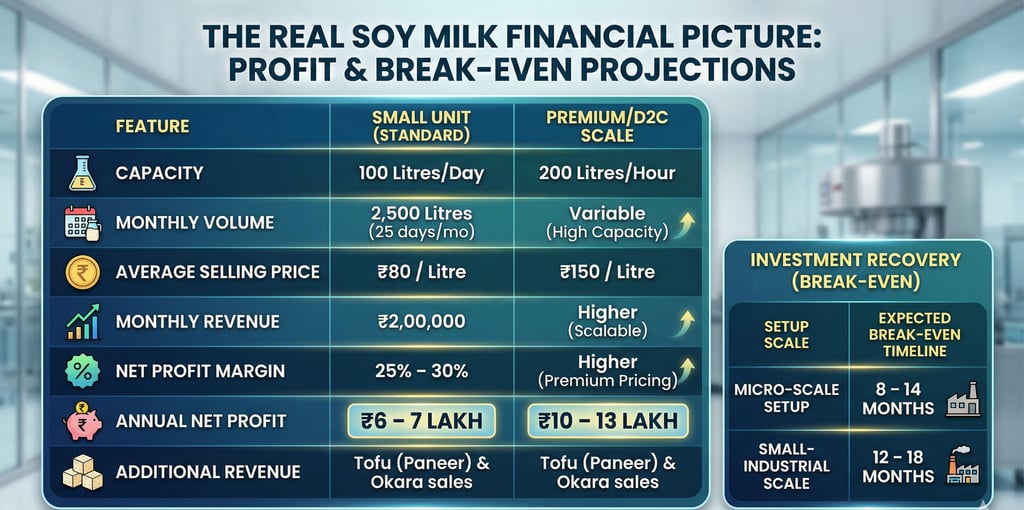
A small unit running at 100 litres per day, operating 25 days a month, produces 2,500 litres monthly. At a blended average selling price of ₹80/litre (mix of household and B2B), that's ₹2 lakh monthly revenue. After raw material, packaging, electricity, and labor costs, a realistic net profit margin of 25–30% gives you ₹50,000–₹60,000 per month — or ₹6–7 lakh per annum.
Scale up to 200 LPH with premium gym and D2C pricing averaging ₹150/litre? You're looking at ₹10–13 lakh annually. Add tofu sales and okara revenue on top.
Break-even for a micro-scale setup typically happens within 8 to 14 months. For the funded small-industrial scale, 12 to 18 months is realistic.
Legal Licenses: Don't Skip This Part
You cannot legally sell food in India without proper registration. Here's what you need, in simple terms.
FSSAI Registration or License: This is mandatory for every food business in India. If your annual turnover is below ₹12 lakh, you need a Basic FSSAI Registration (simple, low-cost online process via foscos.fssai.gov.in). Above ₹12 lakh, you need a State FSSAI License. Both are available online. Without this, you cannot sell, label, or distribute your product legally.
Udyam (MSME) Registration: Free to register online at udyamregistration.gov.in. This single registration makes you eligible for government loan schemes like PMEGP (Prime Minister's Employment Generation Programme) and MUDRA loans, which can fund 80–90% of your project cost at subsidized interest rates. If you're not registered as an MSME, you're leaving free money on the table.
Trade License and Health NOC: Apply through your local municipal corporation. This certifies that your manufacturing premises meet basic hygiene and zoning requirements. Required before you can operate commercially.
Labeling Compliance: Under FSSAI's plant-based milk guidelines, your packaging must clearly state ingredients, nutritional information, manufacturing date, best-before date, and the FSSAI license number. If you're making any health claims ("high protein," "cholesterol-free"), they must align with permitted FSSAI standards.
2026 Plastic Ban — Plan Now: India's phased single-use plastic restrictions are tightening. Start planning for glass bottles, aseptic Tetra Pak-style cartons, or food-grade paper packaging from Day 1. It will save you a painful and expensive transition later.
Risks and How to Handle Them Honestly
Every business has risks. Here are the real ones for soy milk — and the real solutions.
Short shelf life: Fresh soy milk spoils fast. Solution? Either focus on hyper-local, daily-delivery B2B (gyms, cafés within a 10 km radius) where freshness is actually your brand advantage, or invest in pasteurization equipment early. Both are valid strategies. Pick one based on your target market.
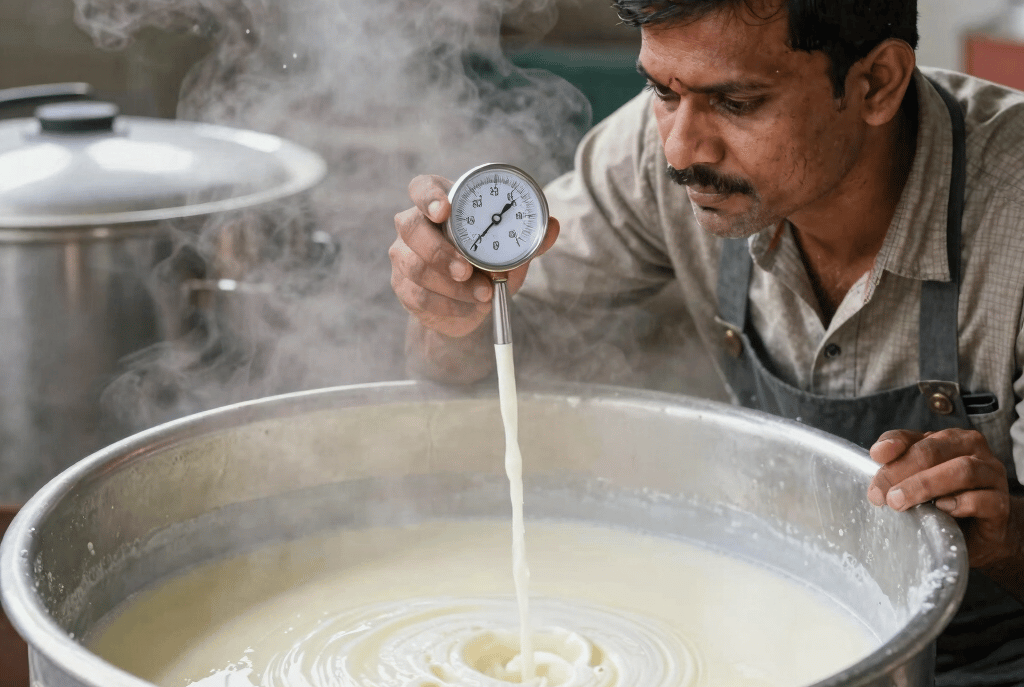
The beany aftertaste problem: This is the #1 reason people don't like homemade soy milk. The solution is not a secret ingredient — it's simply proper boiling. Full 100°C for a full 20 minutes. Every single batch. Add natural flavors post-boiling. Cardamom especially works brilliantly to mask any residual off-notes and also appeals strongly to Indian palates.
Hygiene and spoilage: Use stainless steel equipment throughout (no aluminum, no plastic vessels for boiling or storage). Sanitize daily. Get your Health NOC renewed. Train anyone handling the product on basic food hygiene. This isn't optional — one hygiene complaint spreads faster than any marketing campaign.
Competition from big brands: Sofit and Hershey's are your indirect competitors, not direct ones. They sell processed, shelf-stable, mass-produced soy milk in supermarkets. You're selling fresh, locally-made, custom-flavored soy milk directly to gyms and homes in your city. That's a different product in many ways. You win on freshness, flavor customization, and price. They win on shelf life and distribution. These are different markets — don't try to fight them on their turf.
Your Launch Checklist: Do These in Order
Register FSSAI Basic and Udyam MSME registration online — both are free or nearly free.
Apply for a PMEGP or MUDRA loan to fund your equipment — your Udyam registration is required for this.
Buy a basic wet grinder and boiling setup (₹15,000–₹45,000) to start, or a small automatic plant if funded.
Develop and taste-test your 2–3 launch flavors — Plain, Chocolate, and Cardamom are your safest bets.
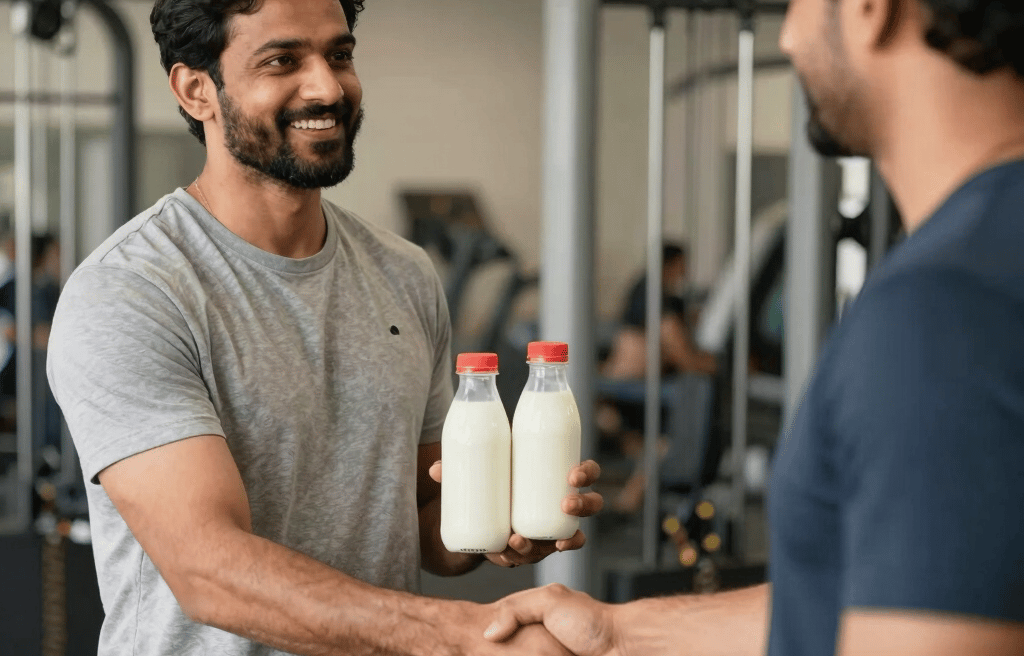
Approach 2 local gyms or health cafés for a free trial week. Get feedback. Convert them to weekly B2B clients.
Launch a WhatsApp Business account and an Instagram page — start D2C subscriptions for daily or weekly home delivery.
Set up a deal with a nearby poultry farm or bakery to sell your okara. This turns waste into a revenue stream from Day 1.
Start planning for aseptic or eco-friendly packaging before plastic restrictions tighten further.

FAQ: Real Questions, Straight Answers
How much money do I need to start a soy milk business from home? You can start at micro scale for as little as ₹15,000 to ₹45,000 using a basic wet grinder and boiling setup. For a small commercial plant with proper packaging, budget ₹1.5 to ₹5.5 lakh — most of which can be funded via PMEGP or MUDRA loans.
Is the soy milk business profitable in India in 2025–2026? Yes — with production costs of ₹20–30/litre and selling prices ranging from ₹60/litre (household) to ₹300/litre (fitness market), margins are strong. A small unit can net ₹5–13 lakh annually depending on scale and branding.
How do I remove the beany smell from soy milk? Boil at 100°C for a minimum of 15–20 minutes without reducing heat. This inactivates the trypsin inhibitors responsible for the beany odor. Add cardamom, vanilla, or natural flavors after boiling for best results.
What FSSAI license do I need for soy milk manufacturing? If your projected turnover is below ₹12 lakh per year, apply for FSSAI Basic Registration. Above ₹12 lakh, you need a State FSSAI License. Both are available online at foscos.fssai.gov.in.
Can I get a government loan for soy milk manufacturing? Yes. Register on udyamregistration.gov.in first to get your MSME/Udyam certificate. Then apply for PMEGP through the KVIC portal or a MUDRA loan through any nationalized bank. These schemes can cover 80–90% of your project cost.
Soy milk business mein kitna kharcha aata hai shuru karne mein? Ghar se shuru karne ke liye ₹15,000 se ₹45,000 kaafi hain. Agar aap small industrial plant lagana chahte hain, toh ₹1.5 lakh se ₹5.5 lakh ka budget rakhein — jismein se 80–90% PMEGP ya MUDRA loan se cover ho sakta hai.
What is okara and can I really make money from it? Okara is the solid pulp left after extracting soy milk from ground soybeans. It's high in protein and fiber. Poultry farmers buy it as animal feed, bakeries use it as flour substitute, and some entrepreneurs sell it as a health ingredient. It's free revenue from your production process — don't throw it away.


Final Word: Start Small, Think Big, Move Now
The soy milk business in India is not a future opportunity. It is a present one — and the window is wide open for small, local manufacturers who move fast and smart.
You don't need a big factory. You don't need a lakhs-deep marketing budget. You need a ₹15,000 grinder, a clean kitchen, proper FSSAI registration, two gym clients, and the discipline to boil your milk at 100°C for exactly 20 minutes every single batch.
Solve the beany taste problem — and you're already ahead of 80% of people who've tried this. Brand it well, price it right for your market. This is one of the few food businesses in India right now where the cost-to-revenue math, the regulatory support, and the consumer demand are all aligned at the same time.
That ₹30 litre sitting in your pot? With the right label, the right client, and the right city — it becomes ₹300. That's not a fantasy. That's food tech entrepreneurship.
Not the right fit for you? Explore our high-impact, low-investment alternatives.
Need help with Business registration and Compliance? contact Us Today.
Connect:
Get in touch with our expert team.
Follow us:
bizzaccelera@gmail.com
+91-9313528947
© 2025. All rights reserved.
Join Our News Letter
Disclaimer : The information provided on Bizz Accelera is intended for general informational and educational purposes only.