
Green Banana Flour Business in India: Turn ₹20 Bananas into ₹700 Superfood Powder
aw bananas at ₹20/kg can become a branded superfood powder selling at ₹700/kg. Discover the full manufacturing process, investment breakdown, legal steps, and marketing strategy to launch your Green Banana Flour business in India today.
BUSINESS IDEAS
Bizz Accelera
4/14/202611 min read
The Opportunity Nobody Is Talking About
Let me ask you something.
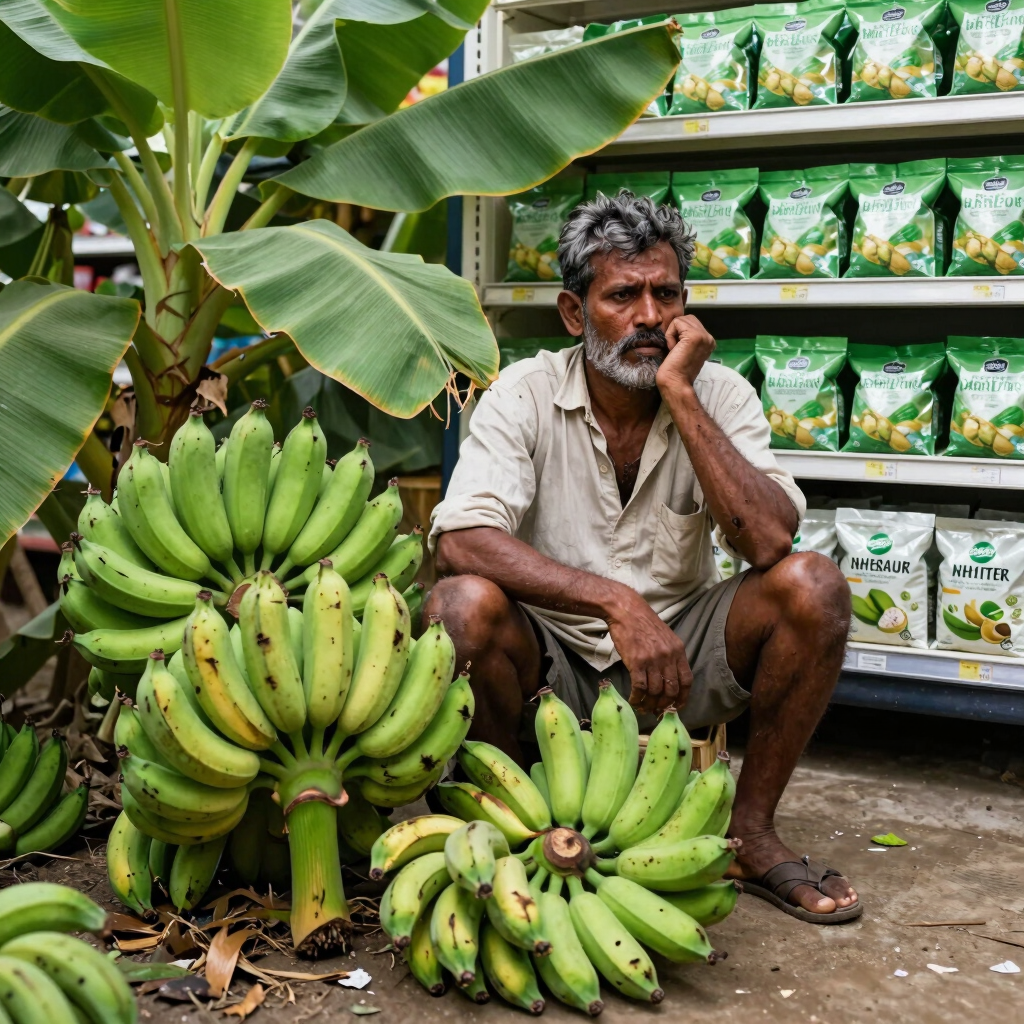
Every year, India produces over 30 million tonnes of bananas — making us the world's largest banana producer. And yet, a huge chunk of that harvest never reaches the consumer. Farmers lose money on undersized, cosmetically imperfect, or surplus bananas. They rot in fields. They get thrown away.
Meanwhile, in health food stores across Mumbai, Delhi, and Bengaluru — and on Amazon and Flipkart — a product called "Green Banana Flour" is selling for ₹500 to ₹800 per kilogram. Imported. Branded. Marketed as a superfood.
Here is the irony: the raw material for that premium superfood is sitting in Indian farms, going to waste, priced at ₹20 per kg.
That gap — ₹20 raw banana to ₹700 superfood powder — is your business opportunity.
The gluten-free and diabetic-friendly food market in India is growing at 15 to 20% CAGR. The baby food market wants clean, natural ingredients. Gyms and wellness brands want functional flour alternatives. And nobody is producing enough of this locally.
This article is your complete, step-by-step guide to starting a Green Banana Flour (Raw Banana Powder) manufacturing business in India — from sourcing to selling, machines to margins, FSSAI to Instagram.
What Exactly Is Green Banana Flour — And Why Is It Better Than Regular Wheat Flour?
Before we talk about business, let us understand the product. Because if you cannot explain what you are selling, you cannot sell it.
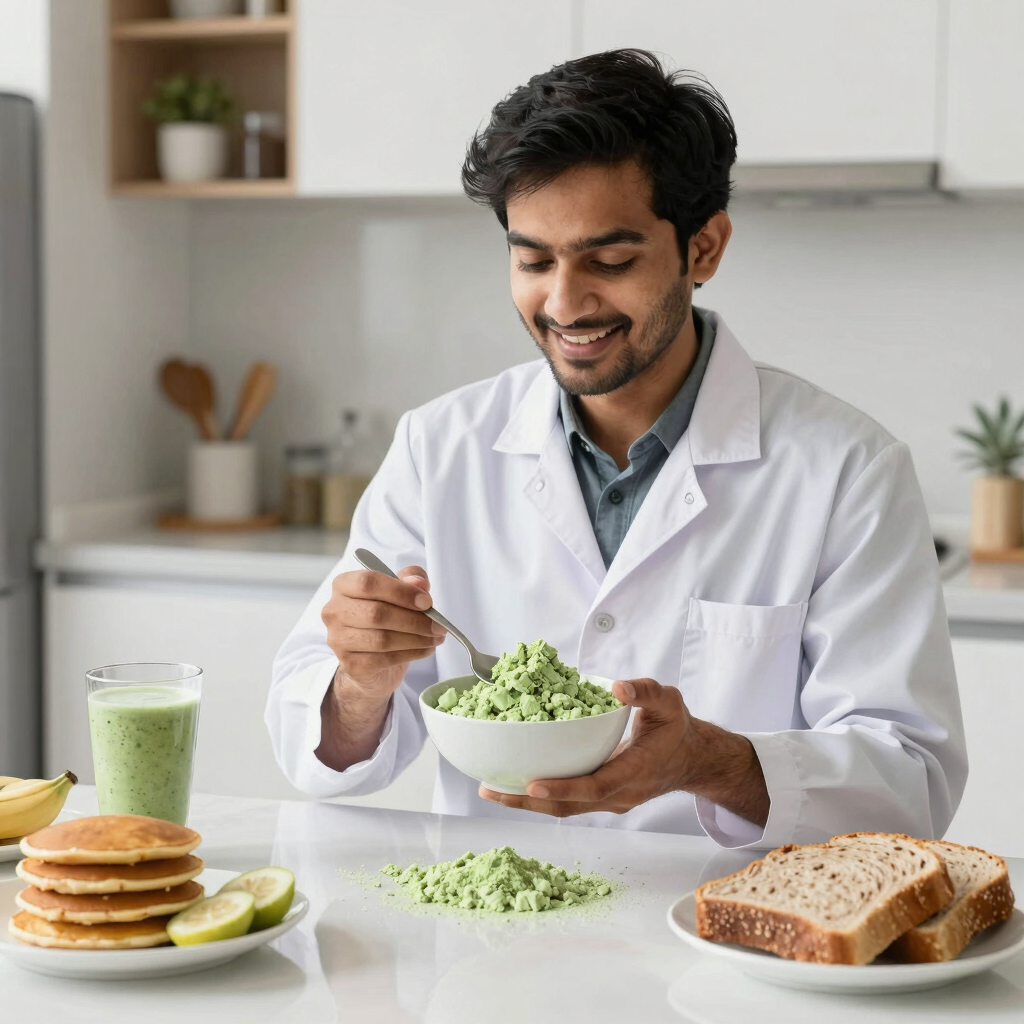
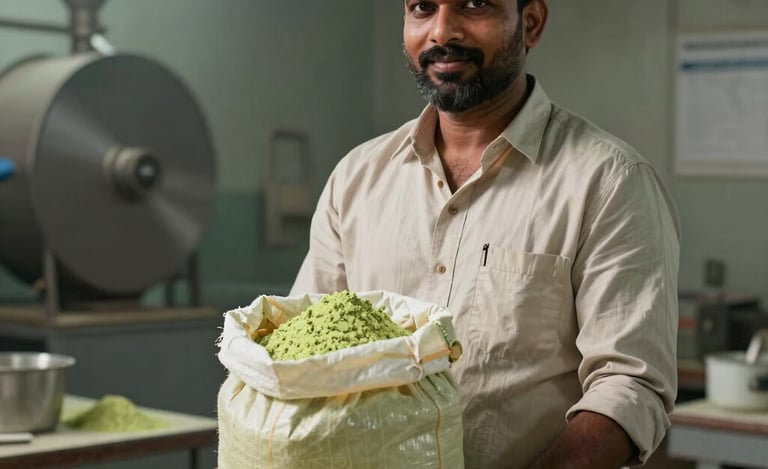
Green Banana Flour is made from raw, unripe bananas that are peeled, sliced, dried, and ground into a fine powder. That is it. Simple process. But the result? Something genuinely special.
Here is why health-conscious consumers are paying premium prices for it:
Gluten-Free: For people with celiac disease or gluten sensitivity, wheat flour is the enemy. Green banana flour is a natural, grain-free alternative for baking, thickening, and cooking. The global gluten-free food market is massive, and India is catching up fast.
Resistant Starch Powerhouse: This is the real USP. Raw bananas are extremely high in resistant starch — a type of starch that your body does not digest easily. Instead, it acts like a prebiotic, feeding your good gut bacteria. Once a banana ripens, that resistant starch converts to simple sugar. So the green, unripe banana is where all the nutritional magic lives.
Low Glycemic Index: Is green banana flour better for diabetes than regular wheat flour? Yes — significantly. Because of its resistant starch content and low GI score, it does not spike blood sugar the way white flour or even whole wheat does. For India's 77 million diabetic population, this is not just a food choice — it is a health necessity.
Potassium and Micronutrients: It is naturally rich in potassium, Vitamin B6, and Vitamin C — nutrients that most refined flours have lost completely.
Applications: Smoothies and protein shakes. Gluten-free baking (cookies, bread, pancakes). Baby food and weaning formula. Natural thickener for soups and gravies. Sports nutrition powders.
Now you see why a gym owner, a bakery, a baby food brand, or a diabetic customer is willing to pay ₹500 to ₹700 per kilogram for this.
Step-by-Step: The Green Banana Flour Manufacturing Process
This is where most people get confused or make costly mistakes. Let us walk through the entire process in plain, practical language.
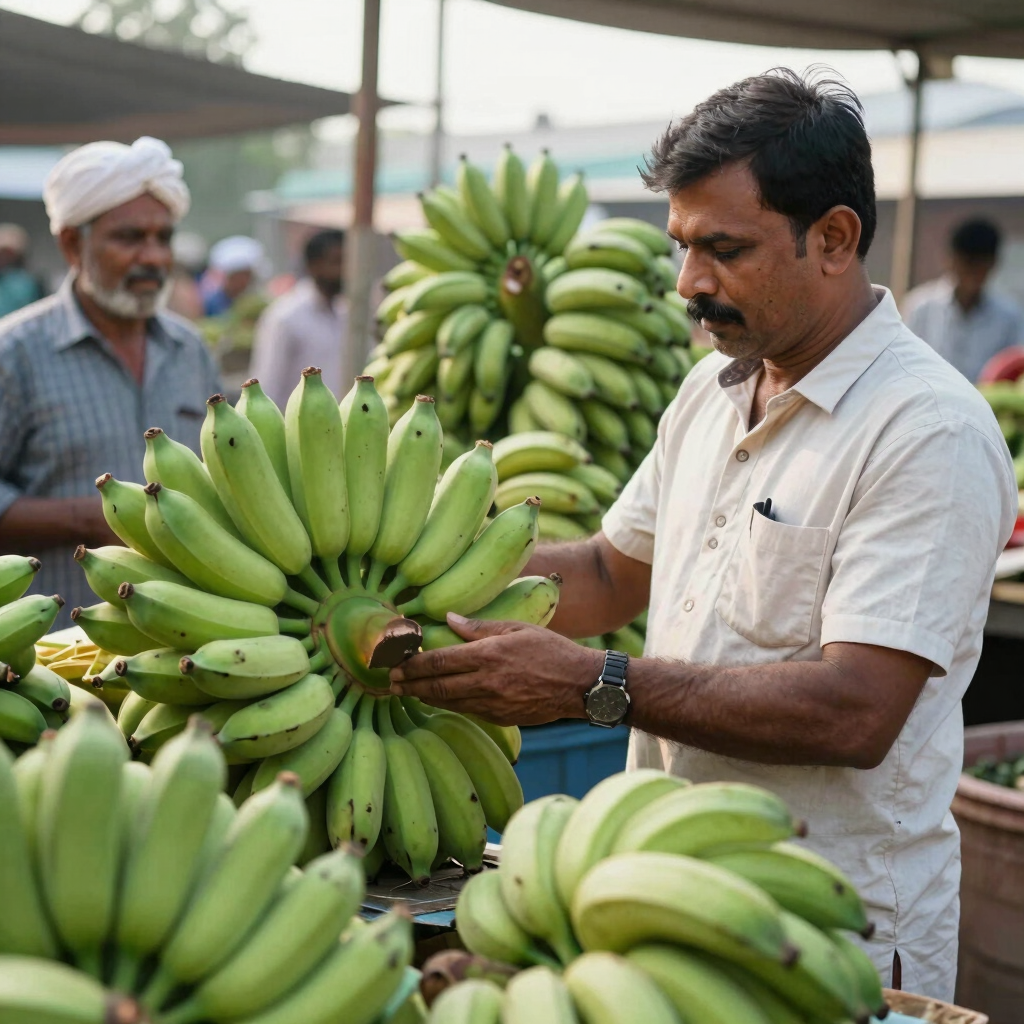
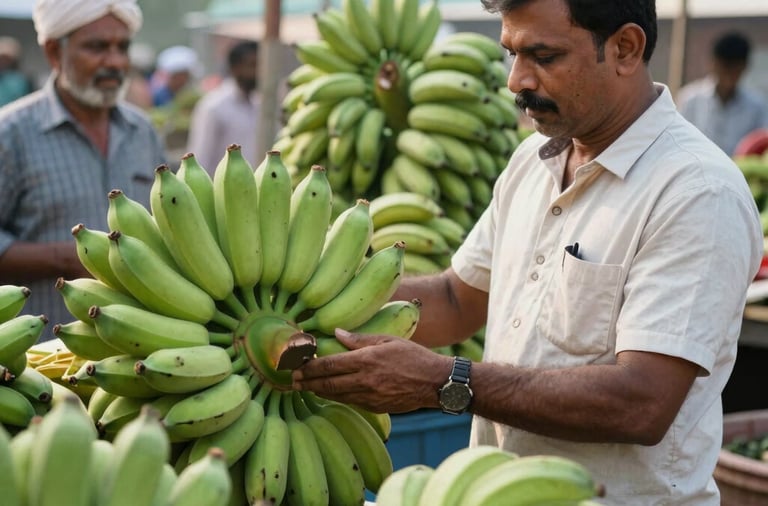
Step 1: Sourcing the Right Bananas
Not all bananas are equal for this purpose. You need firm, unripe, green bananas with high starch content.
The best varieties in India are Nendran (Kerala), which is widely used for banana chips and flour, and Robusta or Cavendish in their fully green stage. Nendran gives a slightly neutral taste and higher starch yield, making it ideal for flour.
Where to source? Directly from farmers in banana-growing districts of Maharashtra, Andhra Pradesh, Tamil Nadu, Gujarat, and Karnataka. Contact local APMC mandis. Build a direct farmer network — it keeps your raw material cost at ₹20 to ₹25 per kg and ensures freshness.
Critical rule: Bananas must be processed within 24 to 48 hours of harvest. Once they start ripening, the starch converts to sugar and your flour quality drops completely.
Step 2: Washing
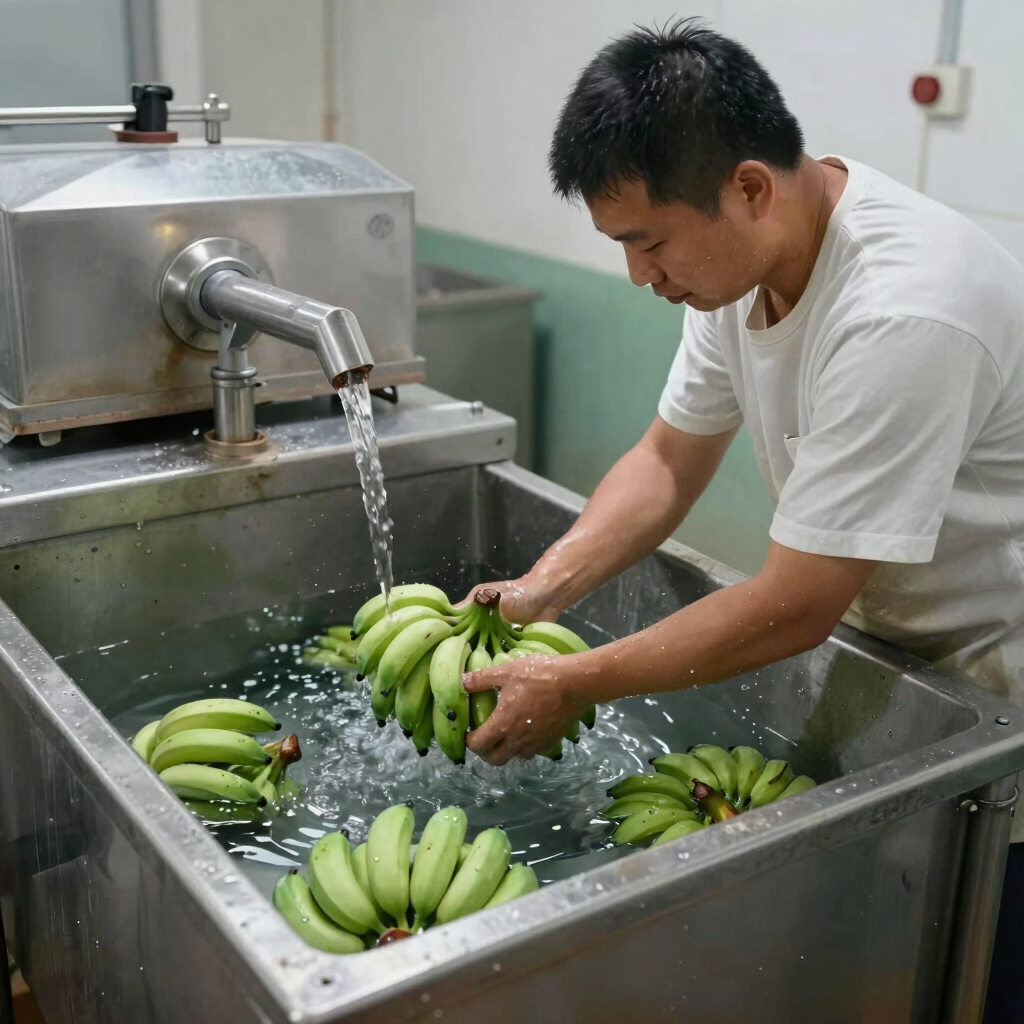
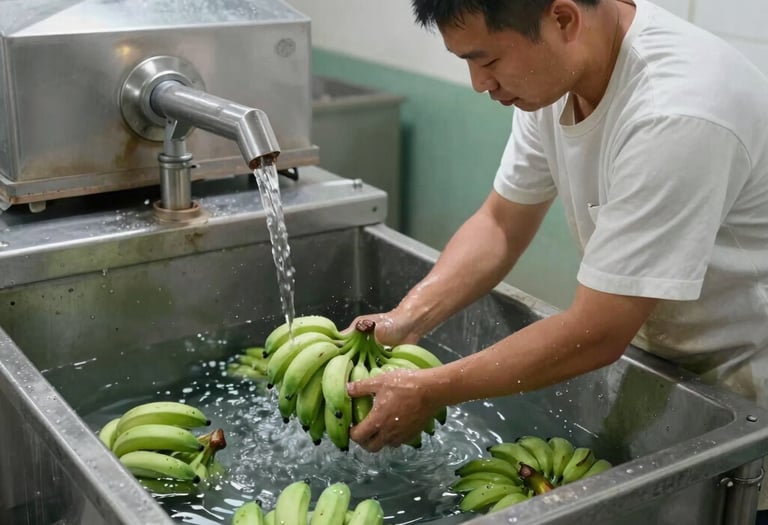
Wash the bananas thoroughly in clean, lightly chlorinated water. Raw bananas have a latex coating on the skin that can contaminate the final product if not removed properly. This step also removes pesticide residue and surface bacteria.
Step 3: Peeling and Slicing
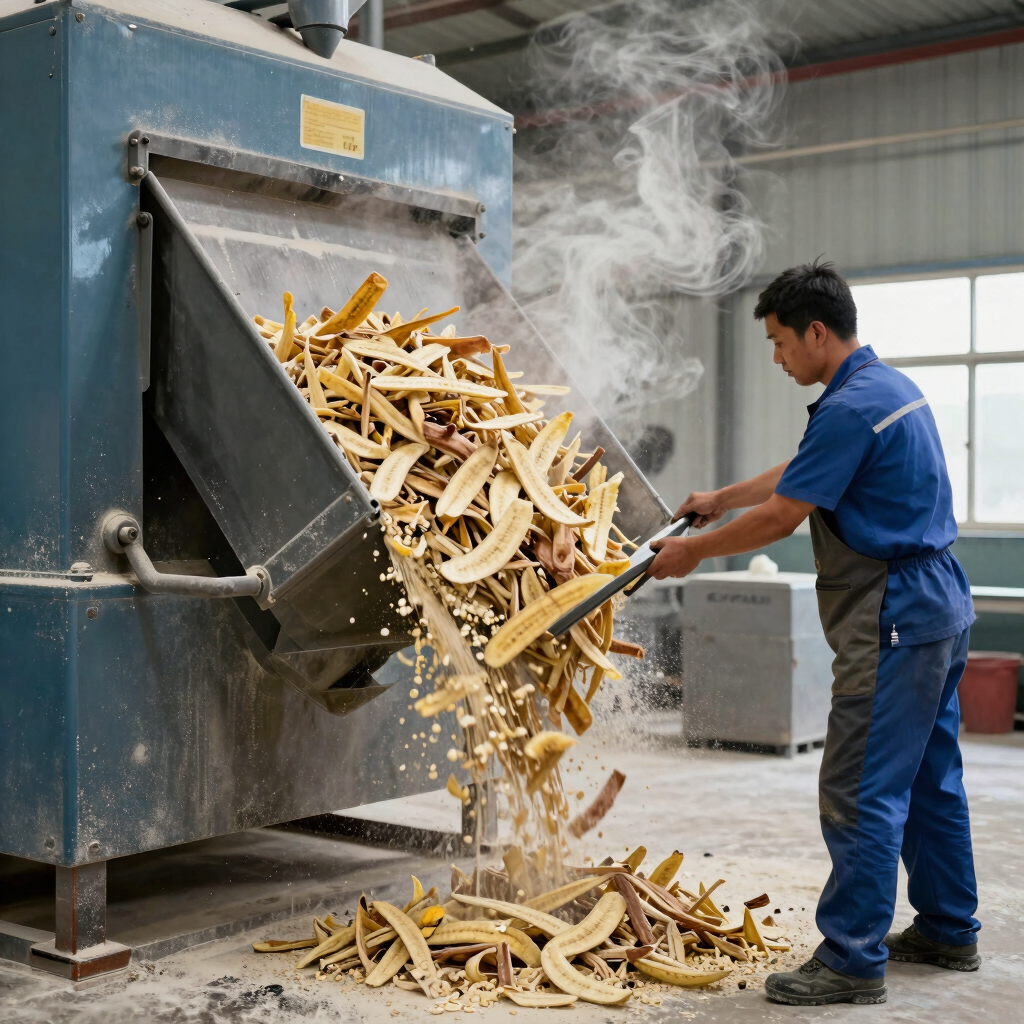
Peel the bananas carefully. At micro-scale, this is done manually. At industrial scale, you use a mechanical peeler-slicer combination.
Slice into thin discs of 1 to 2 mm thickness. Thinner slices dry faster and more evenly — reducing drying time and energy cost.
Step 4: The Secret Step — Anti-Browning Treatment
Here is where many beginners go wrong, and it ruins their product.
The moment you peel and slice a raw banana, enzymatic oxidation begins. Exposed to air, the flesh turns brown or black. Your powder ends up dark, unappealing, and harder to sell.
The solution is simple and inexpensive: immediately dip the sliced banana pieces into a citric acid solution — typically 0.5% to 1% citric acid dissolved in water. Soak for 5 to 10 minutes. This deactivates the enzyme responsible for browning (polyphenol oxidase) and preserves the natural cream-to-off-white color of the finished powder.
This single step is the difference between a product that looks professional and one that looks like it was made in someone's backyard.
Step 5: Drying — The Most Critical Stage
This is the most energy-intensive and quality-determining step in the entire process. Get this right and everything else follows.
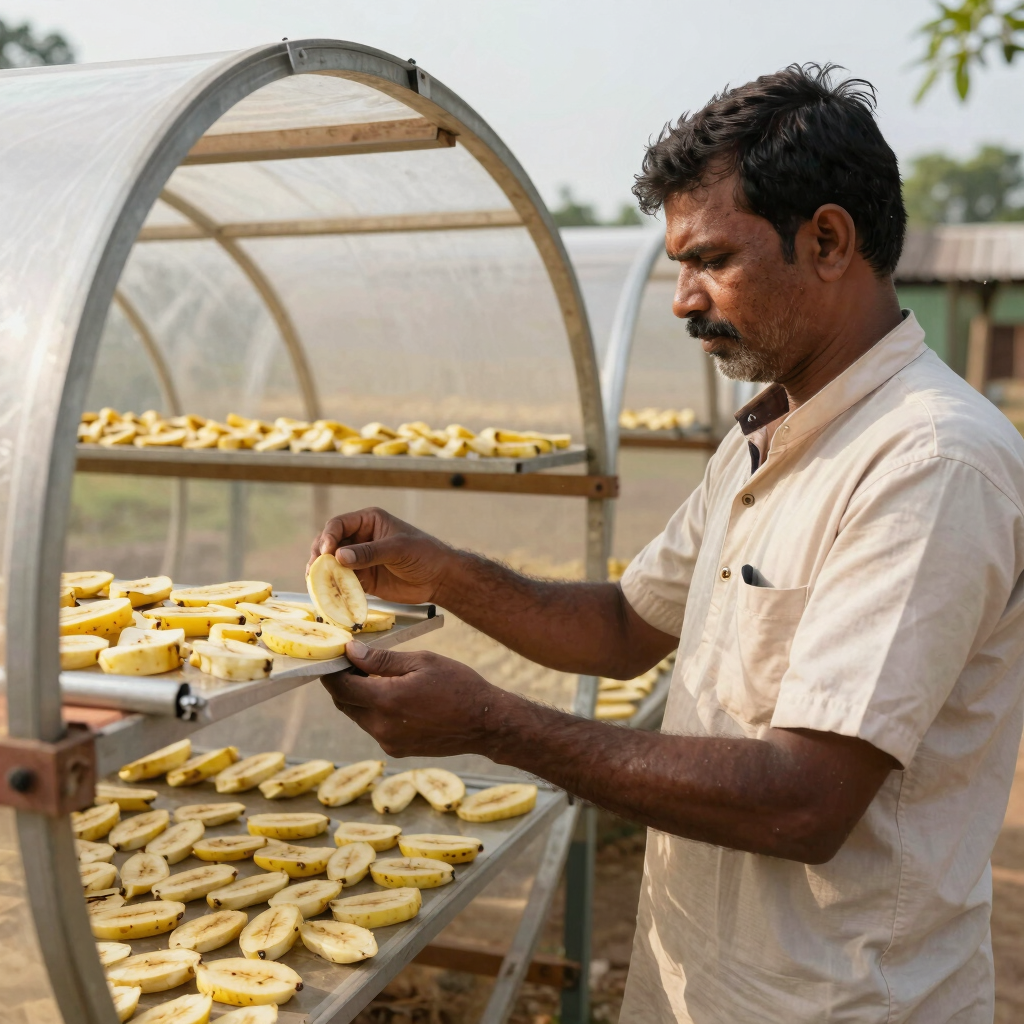
Target: Reduce moisture content below 10% (ideally 7 to 8%). Above 10% moisture, the powder will clump, grow mold, and have a short shelf life.
Temperature setting: 55°C to 60°C. Do not go higher. Above 65°C you start destroying nutrients, especially Vitamin C and resistant starch. Below 50°C, drying takes too long and there is a risk of microbial growth.
Solar Dryers: Low operating cost. Good for pilot or micro-scale in sunny states like Gujarat, Rajasthan, and Maharashtra. Takes 1 to 2 days depending on sunlight. Initial investment is lower — ₹15,000 to ₹40,000 for a basic solar tunnel dryer.
Electric Cabinet Dryers / Industrial Dehydrators: Consistent results regardless of weather. Better for quality control and FSSAI compliance. Drying time: 8 to 14 hours. Cost: ₹40,000 to ₹2,00,000 depending on capacity.
For a serious business that sells to B2B clients and needs consistent quality year-round, electric dehydrators are the right choice.
Step 6: Milling and Sifting
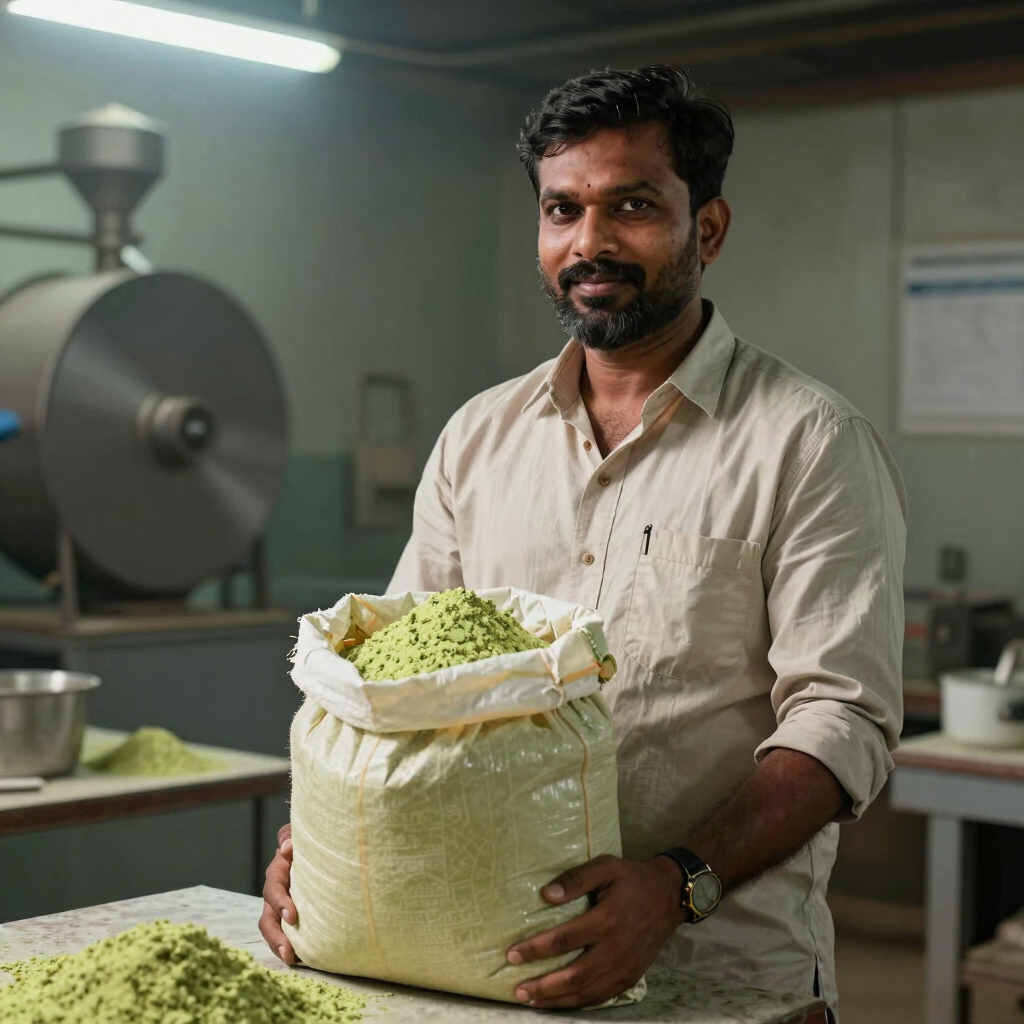
Once the dried banana chips are completely cool and brittle, grind them in a pulverizer or hammer mill. The goal is a fine, uniform flour — similar in texture to wheat flour or finer.
After milling, sift the powder through a fine mesh sieve (80 to 100 mesh is standard for food-grade powder). This removes coarse particles and gives you a smooth, premium-quality product.
Pack immediately after milling. Powder absorbs moisture from air very quickly.
Machinery and Investment — What You Actually Need
Let us break this down by scale.
Micro-Scale (Home-Based Start)
Investment: ₹25,000 to ₹50,000
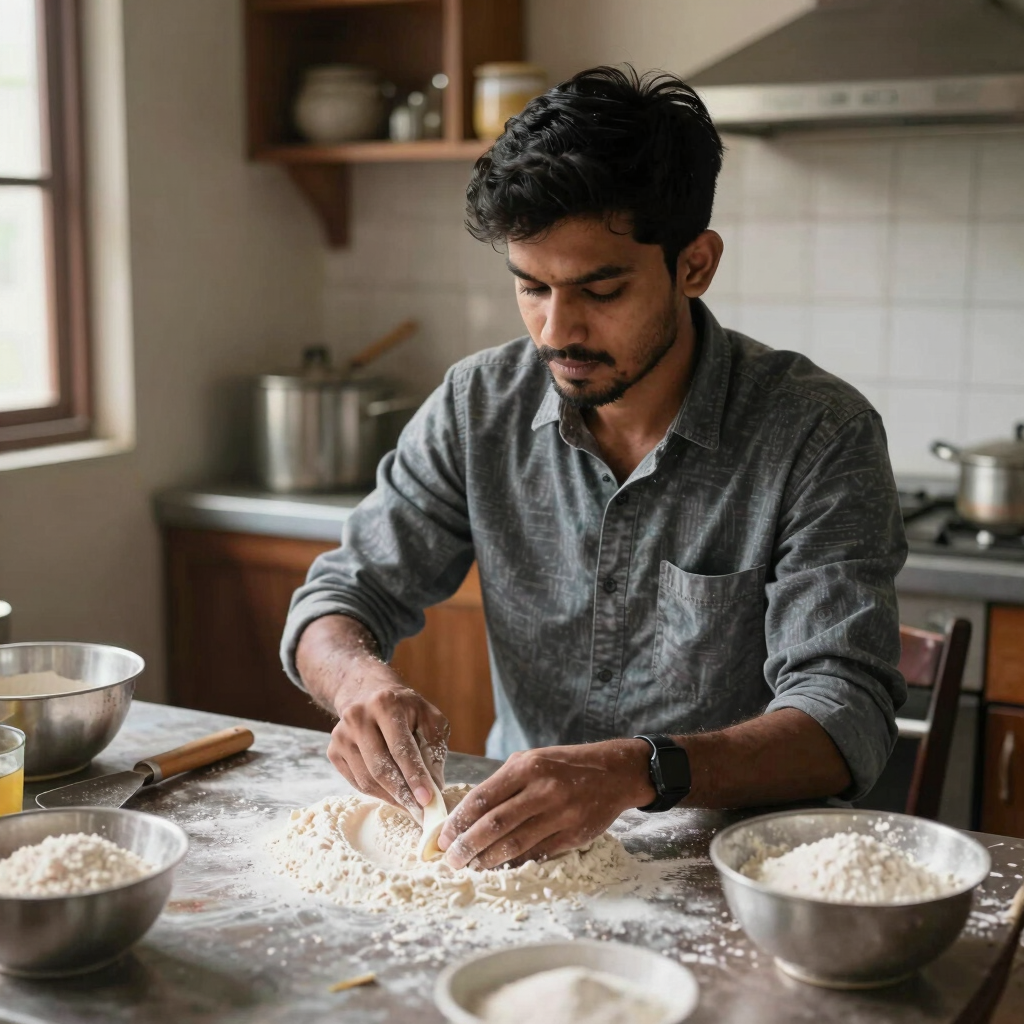
Equipment needed: Manual banana slicer, basic cabinet dryer (4 to 8 tray), small pulverizer/grinder, food-grade packaging bags with heat sealer.
Capacity: 10 to 20 kg of finished powder per day. Good for testing the market, starting D2C sales on Instagram, and learning the process before scaling.
Small Industrial Scale
Investment: ₹2,00,000 to ₹6,00,000
Equipment needed: Semi-automatic banana slicer, industrial tray dehydrator (100 to 200 kg fresh weight capacity), commercial pulverizer/hammer mill, vibrating sieve/sifter, vacuum packaging machine.
Capacity: 50 to 150 kg finished powder per day. Suitable for supplying to local gyms, health food stores, and small B2B clients.
When sourcing machinery, look at manufacturers in Coimbatore (Tamil Nadu), Pune (Maharashtra), and Rajkot (Gujarat). These cities have strong food processing machinery clusters with competitive pricing and good after-sales support.
Legal Compliance and Branding — Do Not Skip This
FSSAI License
This is non-negotiable. To sell any food product in India — even locally — you need FSSAI registration or license. For small-scale manufacturing (annual turnover below ₹12 lakhs), a basic FSSAI registration is sufficient. For larger operations or those supplying to organized retail and e-commerce, you need a State or Central FSSAI License. Without this, you cannot list on Amazon, Flipkart, or supply to any organized buyer.
Apply online at foscos.fssai.gov.in.
Udyam (MSME) Registration
Register your business on the Udyam portal (udyamregistration.gov.in). It is free. And it unlocks access to government subsidies on machinery (PMEGP scheme), priority loans from banks, and support from Food Processing Industries Ministry schemes. This is free money on the table — do not ignore it.
GST Registration
If your annual turnover is expected to exceed ₹40 lakhs (₹20 lakhs for some states), GST registration is mandatory. Even below that threshold, if you are supplying to B2B clients (bakeries, gyms, food manufacturers), they will need your GSTIN for input credit. Register early.
Branding — Why It Matters More Than You Think
Here is a hard truth: two products with identical quality will sell at very different prices based on branding alone.
A locally produced powder sold in a plain polythene bag: ₹150 to ₹200 per kg.
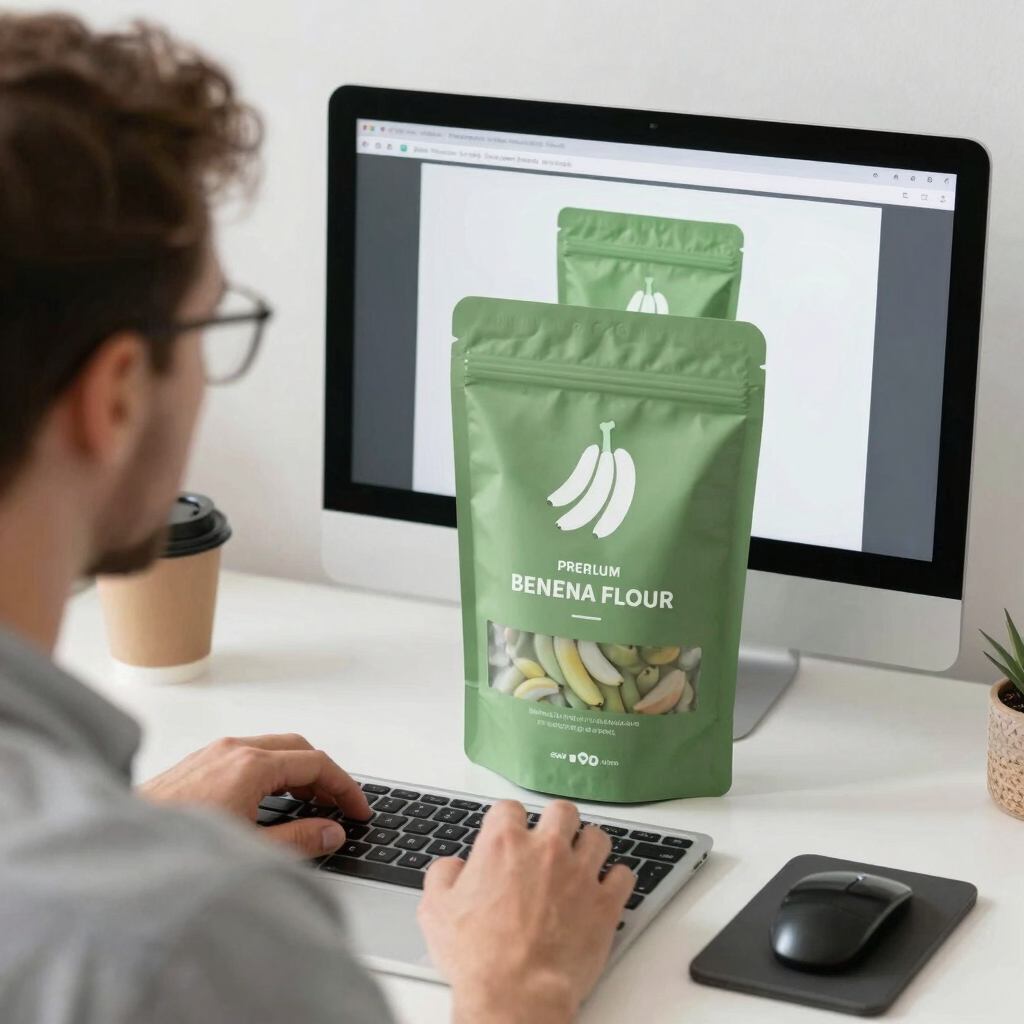
The same powder sold under a brand name like "The Raw Banana Co." or "GreenCore Banana Flour" in a matte-finish, moisture-proof zip-lock pouch with nutrition labels and a clean logo: ₹500 to ₹700 per kg.
Branding is not vanity. It is margin.
Invest in a good product name, a clean label design, and quality packaging. Moisture-proof, food-grade zip-lock pouches are essential — banana flour is hygroscopic (it absorbs moisture from air and clumps). Bad packaging = customer complaints and product returns.
Marketing and Sales Strategy — Where Will You Actually Sell This?
B2B Sales (Business to Business)
This is your fastest route to volume sales. Target:
Gyms and Fitness Centers: They stock or recommend protein powders and health foods to members. Approach the owner or nutritionist directly with a sample and a rate card.
Gluten-Free Bakeries: A growing niche in metro cities. They constantly need reliable suppliers of alternative flours. Your price advantage over imported banana flour is significant.
Baby Food Manufacturers: Green banana flour is increasingly used in weaning foods for its nutrition profile. Small and mid-sized baby food brands are always looking for quality Indian suppliers.
Ayurvedic and Organic Stores: Chains like Organic India retailers, local organic stores, and pharmacy chains with health food sections.
For B2B, focus on consistency, quality documentation (FSSAI certificate, lab test report), and reliable supply. These buyers will stick with you for years if you deliver consistently.
B2C Sales (Direct to Consumer)
Amazon and Flipkart: List under the category of Gluten-Free Foods or Health Foods. Use keywords like "raw banana powder," "green banana flour gluten-free," "banana flour for diabetes." Good product photography and a detailed description make a significant difference.
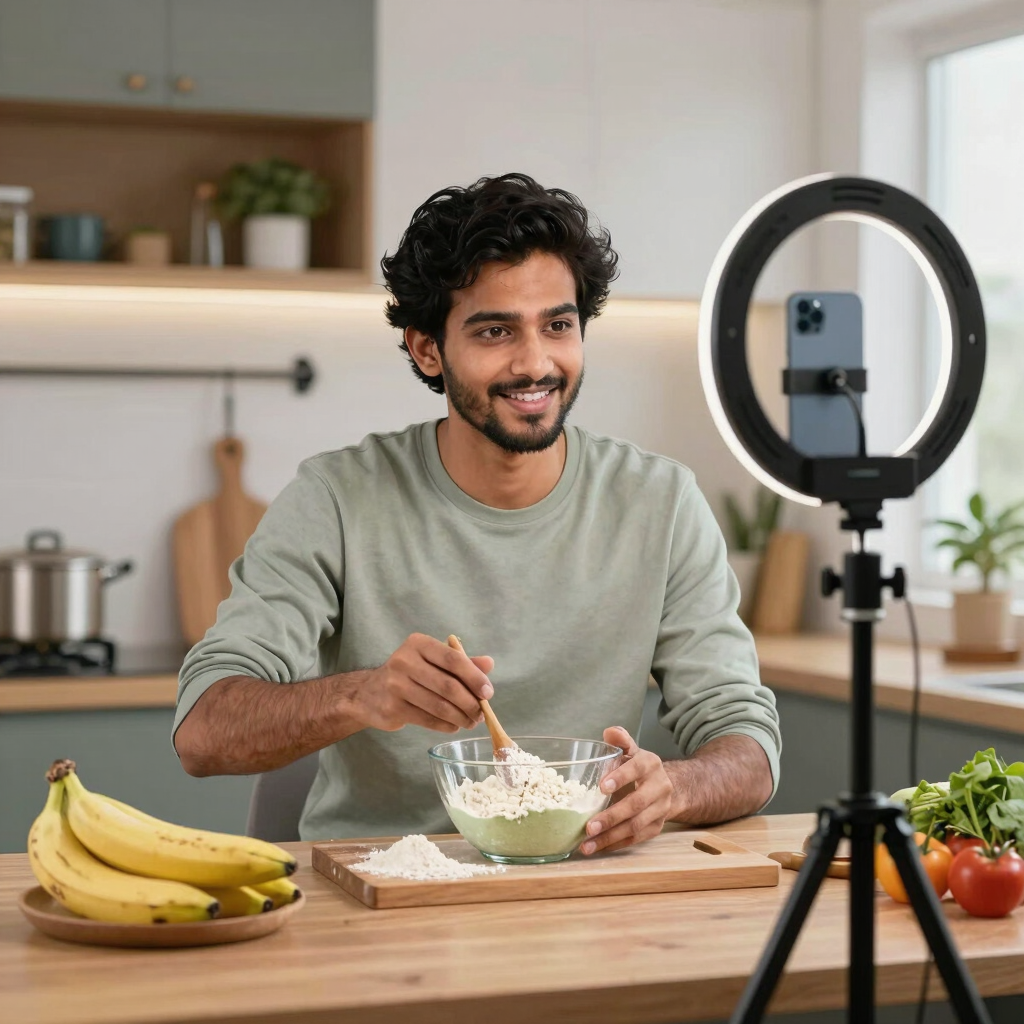
Instagram and Reels: This is arguably your most powerful low-cost marketing channel. Post short recipe videos showing how to make banana flour pancakes, smoothies, or rotis. Show the manufacturing process. Educate your audience on resistant starch and low GI. Authentic, educational content builds trust and drives sales faster than paid ads.
Your Own Website: Long-term, a D2C website with a blog gives you the best margins (no marketplace commission) and helps with SEO ranking for keywords like "green banana flour manufacturing business project report" and "raw banana powder benefits."
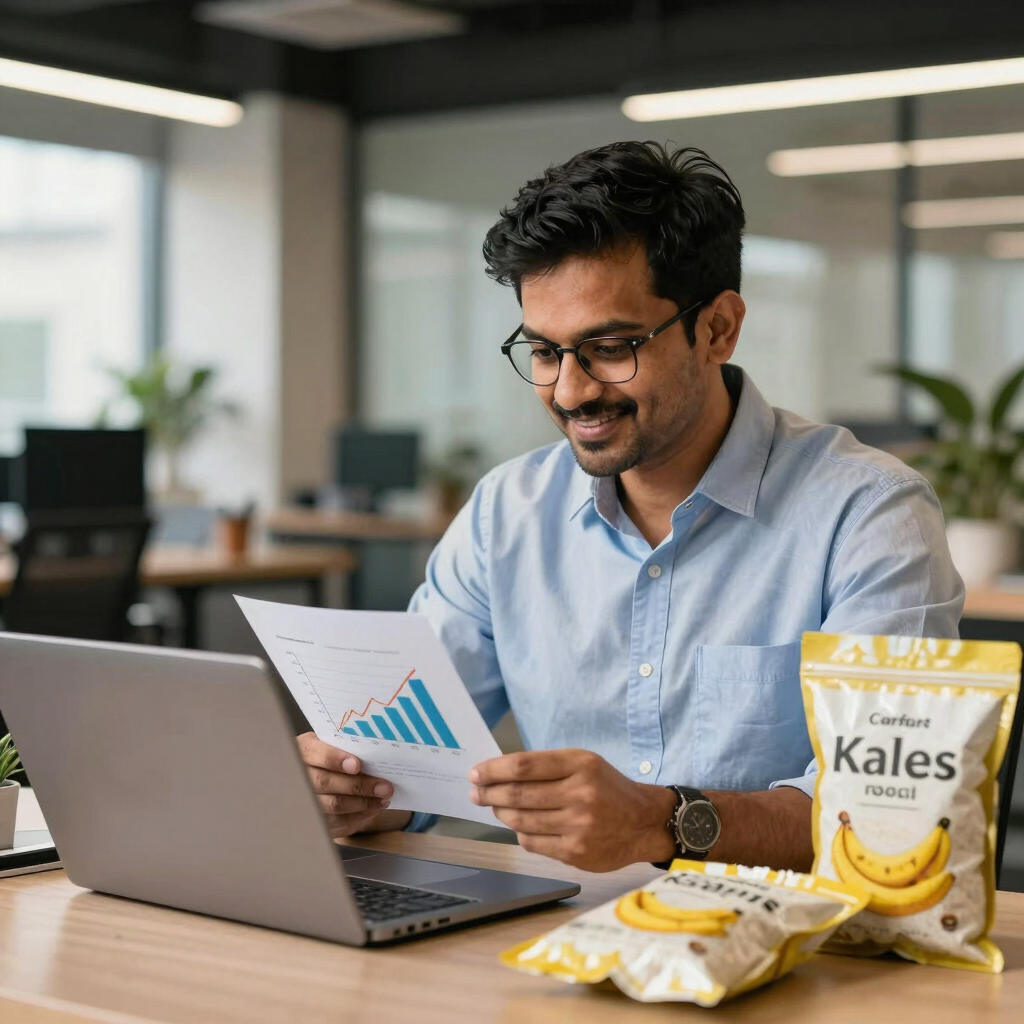

Profit and Risk Analysis — The Real Numbers
Let us talk about money honestly.
Cost breakdown per kg of finished powder: Raw banana: ₹20 to ₹25 (you need approximately 5 to 6 kg of raw banana to produce 1 kg of dried powder, due to water loss during drying — so raw material cost per kg of powder is ₹100 to ₹150) Processing (electricity, citric acid, packaging): ₹50 to ₹80 Labor: ₹30 to ₹50 Overhead and licenses: ₹20 to ₹30
Total cost per kg: approximately ₹200 to ₹310
Selling price: B2B (bulk): ₹350 to ₹450 per kg B2C (branded, retail): ₹500 to ₹750 per kg Online premium branded: ₹600 to ₹800 per kg
Net profit margin: 40% to 60% at retail pricing.
At even 50 kg production per day and a conservative ₹200 net profit per kg, you are looking at ₹10,000 per day — or roughly ₹2.5 to ₹3 lakhs per month from a small industrial operation.
Key Risks to Manage
Ripening of raw material: If bananas ripen before processing, your starch content drops and product quality changes entirely. Maintain cold storage or process quickly after procurement.
Moisture control: This is your biggest post-production risk. Invest in proper packaging. Store finished product in a dry, cool environment.
Browning: Covered above — citric acid treatment solves this. Do not skip it.
Market education: Many Indian consumers are not yet familiar with banana flour. Budget time and content for educating your audience on why it is worth the premium.
FAQ Section
Q: How many kg of raw bananas do I need to make 1 kg of banana flour? Approximately 5 to 6 kg of raw green bananas yield 1 kg of dried flour, due to the high water content (about 70 to 75%) lost during the drying process.
Q: Can I make green banana flour at home to test the business idea first? Yes, absolutely. A basic oven set to 55°C, a home mixer-grinder, and 10 kg of raw bananas is all you need to make your first batch, test the color and texture, and even list it on Instagram before investing in machinery.
Q: Is FSSAI license mandatory even for small home-based operations? For selling to others commercially, yes. Even for home-based food businesses, FSSAI basic registration is required by law. It is an easy online process and costs very little.
Q: What is the shelf life of properly made green banana flour? With moisture content below 8% and moisture-proof packaging, shelf life is 6 to 12 months. Vacuum-packed products can last up to 18 months.
Q: Can I export green banana flour from India? Yes. There is growing international demand, especially from the US, UK, and Gulf markets. For export, you will additionally need APEDA registration (Agricultural and Processed Food Products Export Development Authority) and meet importing country food safety standards.
Q: What is the difference between green banana flour and banana powder used in baby foods? Both are similar in base process, but baby food grade requires stricter quality control, lower microbial counts, and often additional certifications. It is a more demanding B2B segment but commands higher prices.
Conclusion and Your Next Step
This is not just a business idea. It is a solution to three problems at once.
It gives farmers a buyer for surplus and imperfect bananas at better prices. It gives health-conscious Indian consumers a local, affordable alternative to expensive imported superfoods. And it gives you — the entrepreneur — a business with low raw material cost, high value addition, and a market that is only growing.
You do not need a factory to start. You need a dryer, a grinder, 50 kg of green bananas, and the will to start.
Start small. Make your first batch. Get feedback. List it online. Talk to one gym or one bakery. Iterate. Scale.
Not the right fit for you? Explore our high-impact, low-investment alternatives.
Need help with Business registration and Compliance? contact Us Today.
Connect:
Get in touch with our expert team.
Follow us:
bizzaccelera@gmail.com
+91-9313528947
© 2025. All rights reserved.
Join Our News Letter
Disclaimer : The information provided on Bizz Accelera is intended for general informational and educational purposes only.